



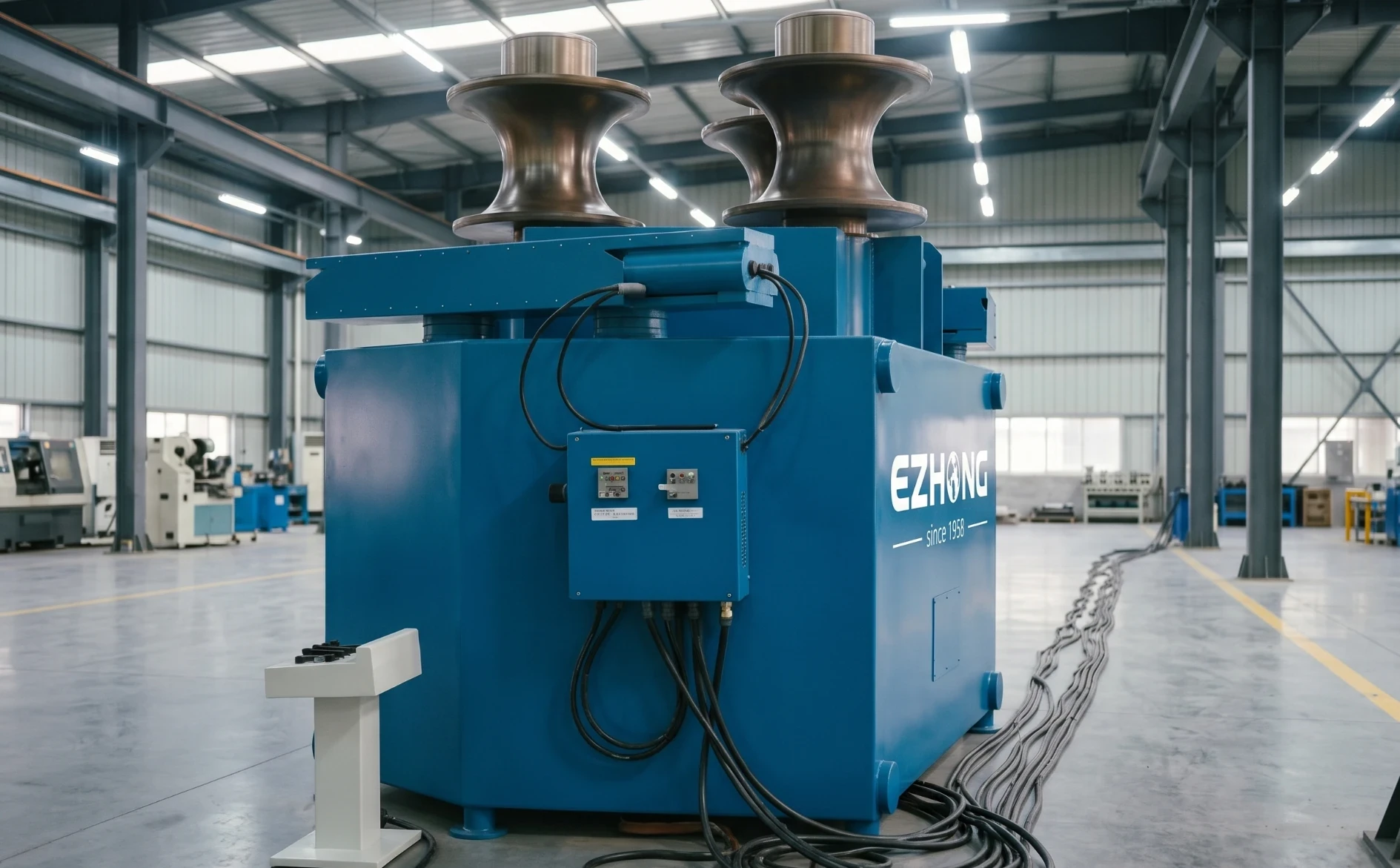
A profile bending machine is specialized equipment designed to bend structural steel sections like angle iron, channel steel, H-beams, I-beams, and pipes into curved or cylindrical shapes. Unlike flat-plate bending machines, profile benders have uniquely shaped rollers that cradle the profile's geometry and apply controlled bending force.
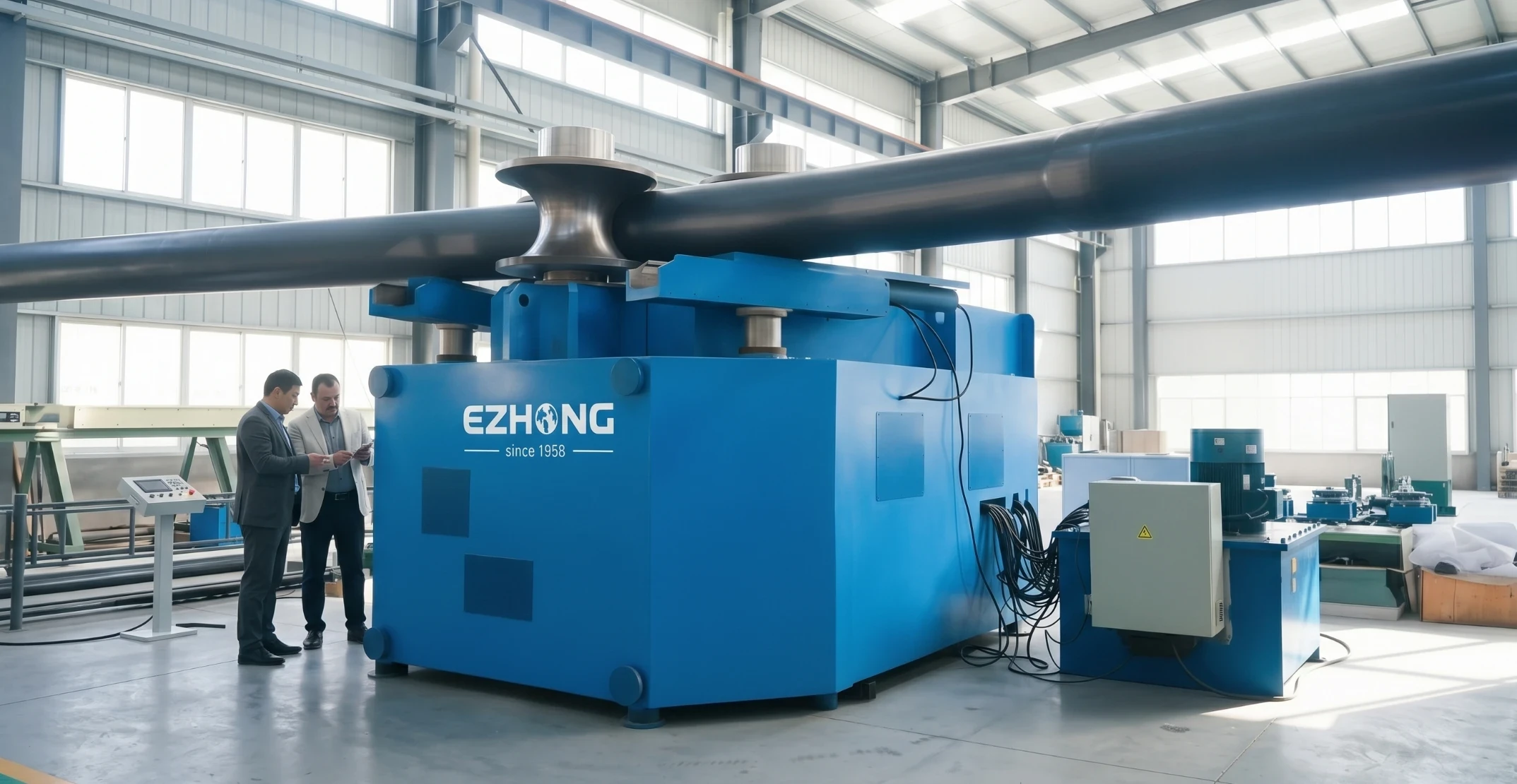
The workpiece (e.g., angle iron or H-beam) is inserted between three roller sets: two lower support rollers and one upper bending roller. As the profile travels through and upper roller descends, the section gradually curves. Multiple passes increase the curve radius until the desired diameter or arc is achieved.
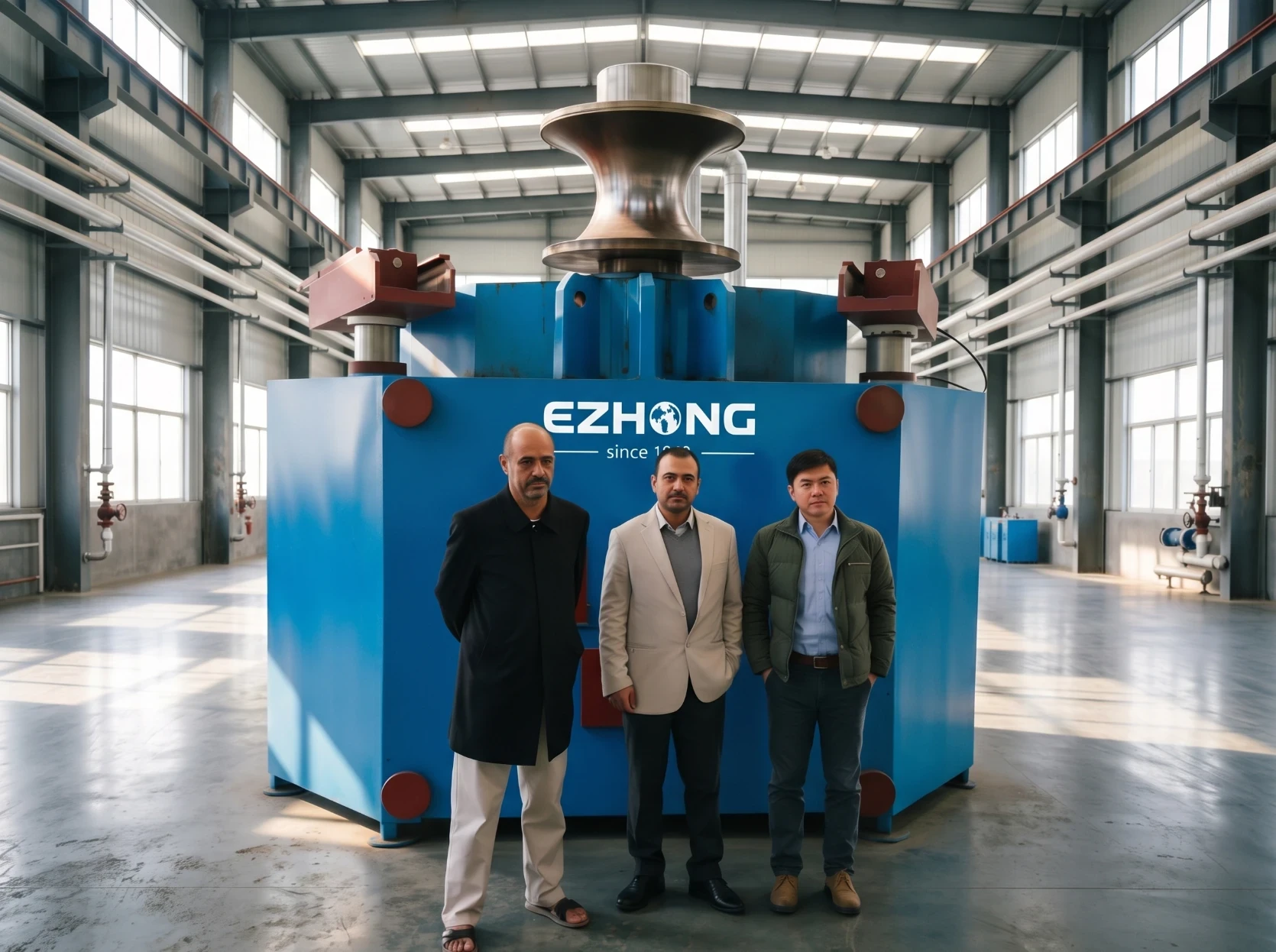
Curved structural profiles are essential for bridge arches, stadium domes, spiral equipment and helical staircases. Single-piece bent profiles eliminate multiple welding seams, cutting labor and improving structural strength. EZHONG THW24 series supports 13+ profile types with interchangeable roller molds, full hydraulic three-roller independent drive, built-in springback compensation for stable, high-efficiency forming.
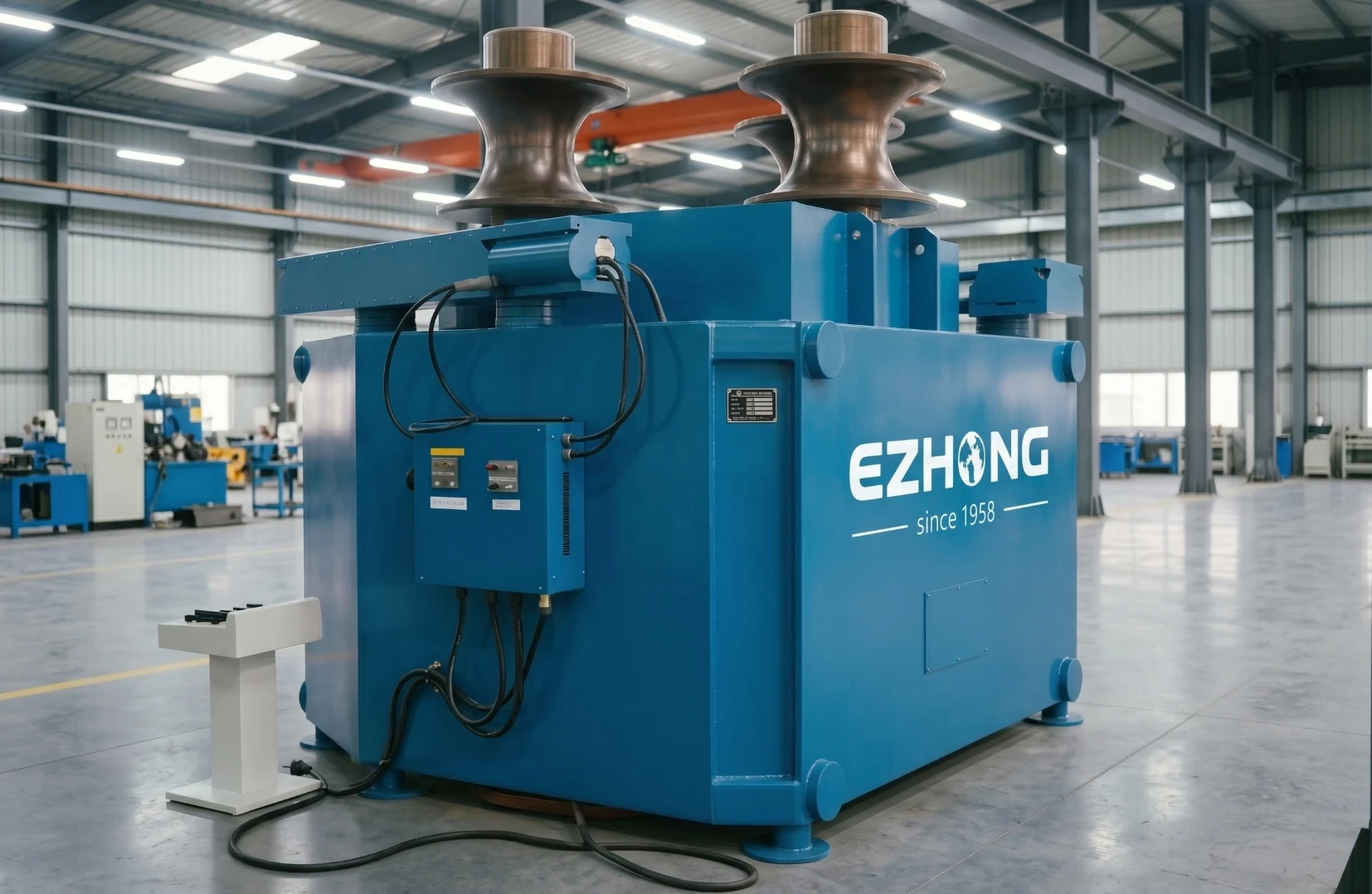
If you operate steel structure factories, bridge & stadium construction manufacturers, tank & pressure vessel workshops, spiral conveyor equipment plants, architectural metal fabrication shops or ornamental metal art studios—and you need one multi-functional bending equipment to process angle, channel, H-beam, pipe and various special structural profiles. Our THW24 series with swappable roller molds covers 13 standard profile types, supports customized special rollers, equipped with full-drive hydraulic and CNC springback compensation, matching small batch custom processing and mass standardized production demands for all curved structural steel projects.
All common structural steel profiles covered, custom roller molds available for special cross-sections
| Profile Type | Typical Industrial Application |
|---|---|
| Angle Steel (L-Section) | Steel framework, bracing, curved arch support |
| Channel Steel (U-Section) | Curved load-bearing channels, large duct frameworks |
| H-Beam / I-Beam | Cylindrical building columns, curved stair main beams |
| Pipe / Round Tube | Spiral conveyors, storage vessel arches, handrails |
| Rectangular Tube / Box Section | Curved box columns, decorative structural frames |
| T-Section (T-Beam) | Curved guide rails, building tie-back components |
| Flat Bar / Plate Strip | Ornamental curved decorative metal parts |
| Angle + Flat Composite Profile | Custom combined structural assemblies |
| Channel + Reinforcement Profile | Heavy-duty reinforced curved beam components |
| Specialty Custom Profiles No.10-13 | Non-standard customer-specific cross-section steel |
Applicable material tensile strength: 250-550 MPa carbon & low-alloy steel; high-strength steel forming supported with customized reinforced roller sets.
Each roller equipped with separate hydraulic drive motor, realizing 100% balanced load distribution, zero synchronization delay, lower daily maintenance cost, and more accurate springback compensation during profile forming.
Complete roller mold replacement finished within 30-45 minutes. One machine processes angle, channel, H-beam, pipe and other ten kinds of profiles, greatly reducing equipment investment and factory floor occupation.
Put in raw profile → continuous rolling to finished curved workpiece → direct unloading. Eliminate repeated clamping and flipping procedures, improving production efficiency by 40-50% compared with traditional split bending equipment.
The system calculates over-bending amount automatically according to material tensile strength and profile cross-section size. After cooling, finished curved radius error controlled within ±10-20mm to meet high precision structural fabrication standards.
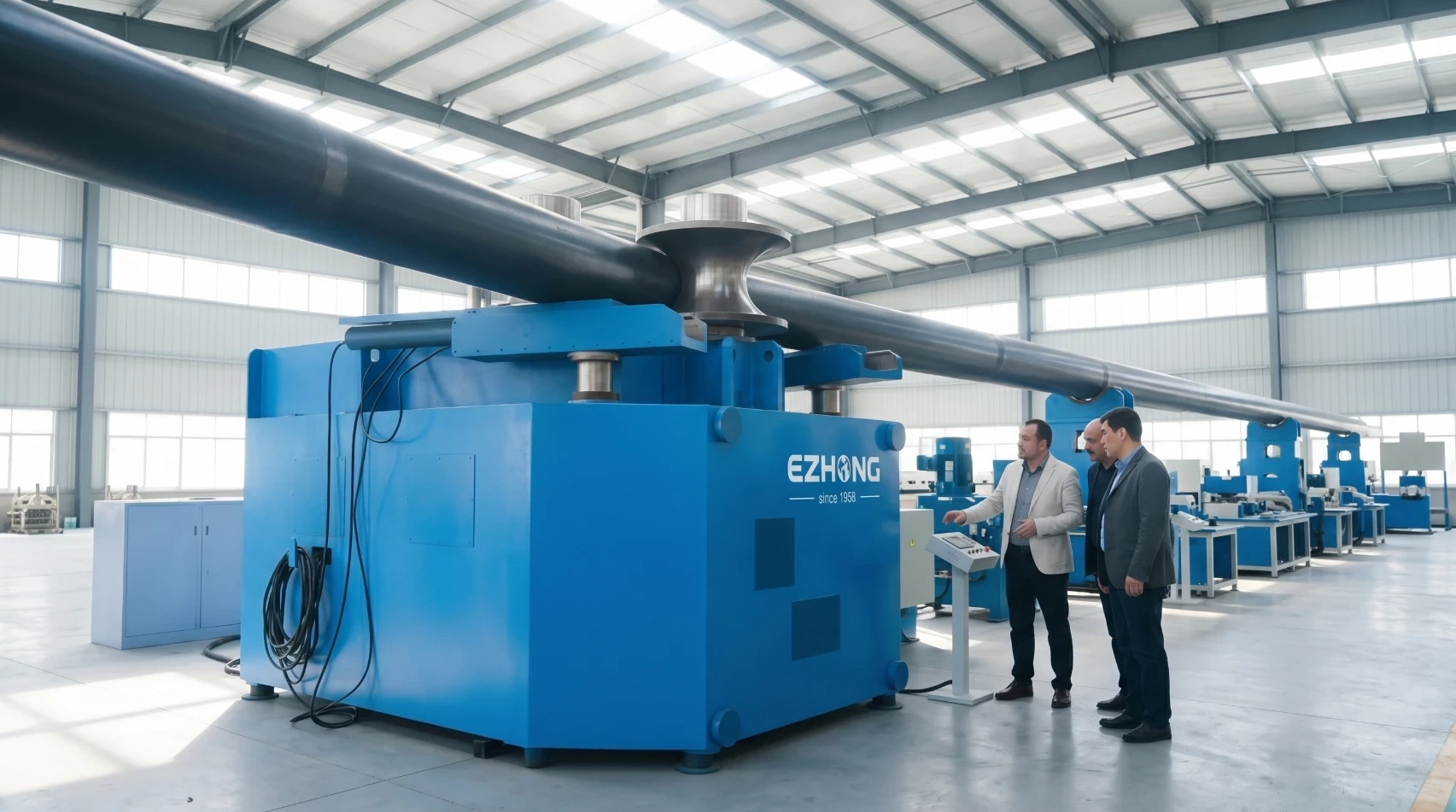
Curved arch ribs, cylindrical support columns, helical handrails for bridges and large stadium buildings.
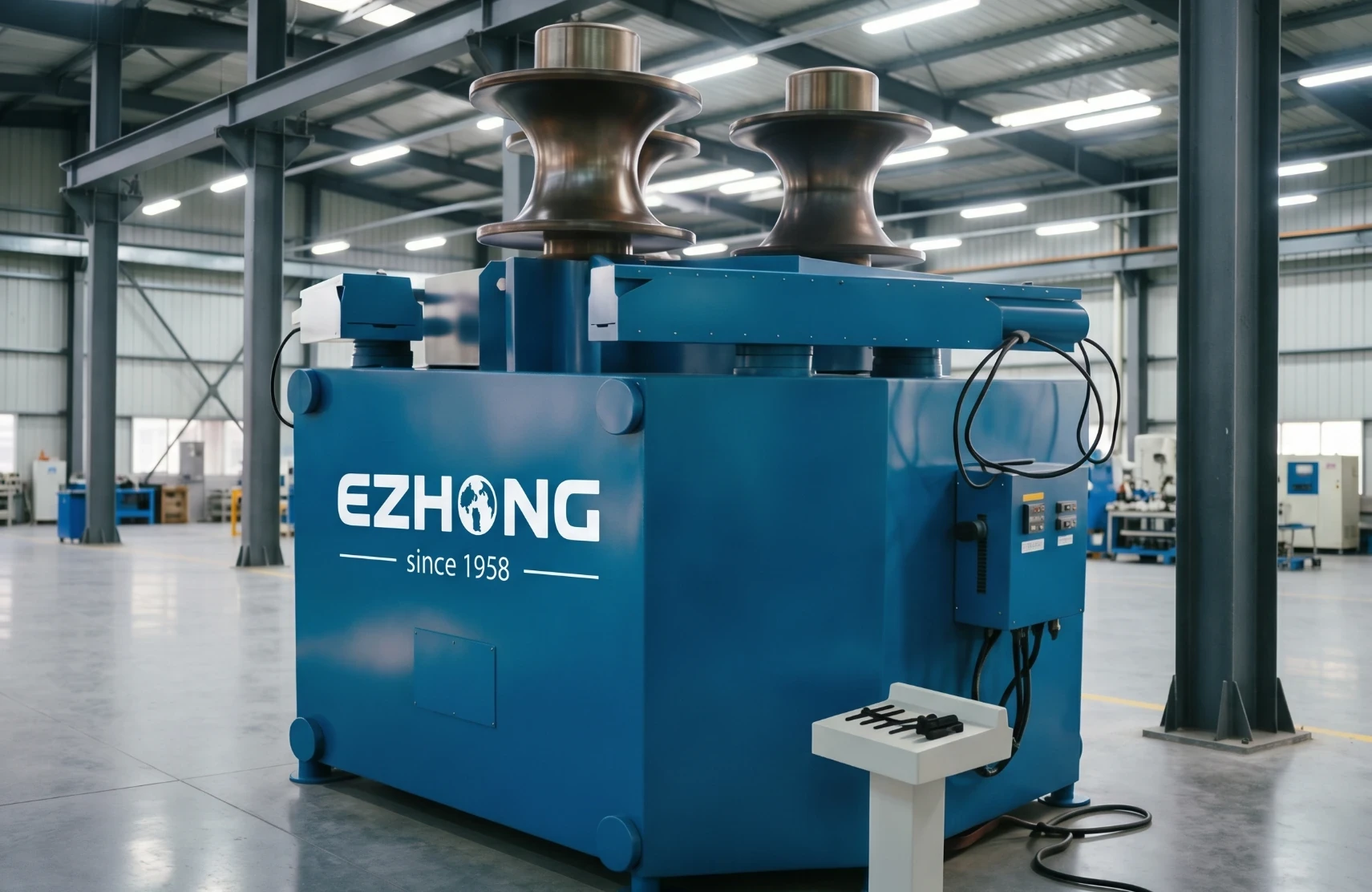
Curved H-beam and channel frameworks for vertical cylindrical storage tanks and pressure vessels.
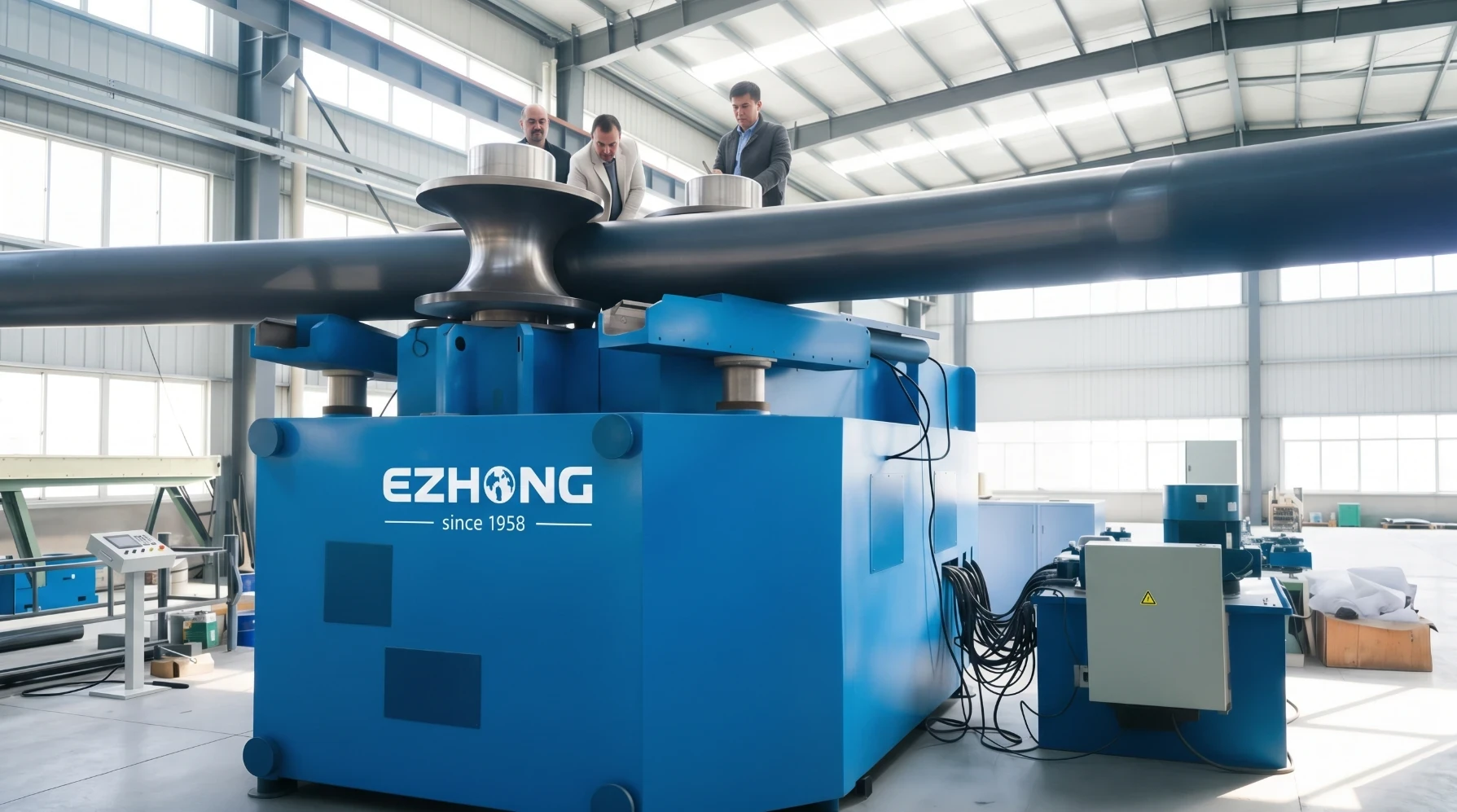
Helical spiral section forming for grain conveyors, screw transport machinery and equipment housings.
Curved structural steel beams and circular pipe handrails for indoor & outdoor spiral staircases.
Special curved profiles for outdoor sculptures, premium architectural decorative metal elements.
Bent channel and round pipe for large commercial HVAC ducts and compressed air pipeline frames.
EZHONG THW24 series profile bending machines are designed for bending 13+ types of structural steel profiles, including angle steel, channel steel, H-beams, I-beams, pipes, rectangular tubes, T-sections, flat bars and other special profiles. Interchangeable roller molds are available for different profile sections, with customized rollers for non-standard cross-sections.
The standard configuration is suitable for carbon and low-alloy structural steel with a tensile strength of approximately 250-550 MPa. For high-strength steel in the 600-1100 MPa range, EZHONG can provide reinforced roller sets, upgraded hydraulic power and optimized forming parameters according to the material and profile requirements.
The minimum bending radius can be around 500 mm for suitable profile sections and configurations. The achievable radius depends on the profile type, section dimensions, material strength and roller configuration. For large-radius forming, the machine can produce gentle arcs with the actual maximum radius determined by the specific project requirements.
Yes. Different profile sections require profile-specific roller molds to ensure stable forming and bending accuracy. EZHONG provides interchangeable roller sets for common profiles, including angle steel, channel steel, H-beams, I-beams and pipes. Customized roller molds are also available for special or non-standard cross-sections based on the customer's profile drawing or sample.
The THW24 series features automatic springback compensation. The control system calculates the required over-bending according to material properties and profile cross-section parameters, helping achieve a more consistent final bending radius after forming and cooling. The actual achievable accuracy depends on the profile, material, radius and process conditions.
Forming time depends on the profile size, material strength, required bending diameter, forming passes and machine configuration. As a reference, a 100 mm angle steel bent to a 1 m diameter may take approximately 3-5 minutes per piece, while larger H-beams or high-strength profiles may require longer forming cycles.
The standard production cycle for a complete THW24 machine is approximately 10-14 weeks. If customized roller molds are required, additional engineering and manufacturing time may be needed. The final delivery schedule will be confirmed according to the machine configuration, roller requirements and project specifications.
For accurate machine selection and quotation, please provide the profile type and section dimensions, material grade or tensile strength, required bending diameter or radius, and the expected production quantity. A profile drawing and sample curved workpiece are also helpful for selecting the appropriate machine and roller configuration.