



EZHONG provides high-performance plate rolling solutions for pressure vessel manufacturers, supporting the fabrication of shells, storage tanks, reactors, heat exchangers, boilers, and other critical cylindrical components.
With decades of experience in heavy plate forming, EZHONG machines are engineered for thick plate processing, large diameter shells, and demanding manufacturing standards, helping customers achieve accurate forming, reliable welding performance, and long-term structural safety.
Pressure vessels are essential equipment widely used in industries such as:
● Oil & gas
● Petrochemical
● Nuclear power
● Energy storage
● Hydrogen energy
● Chemical processing
● Power generation
Manufacturers must transform steel plates into high-precision cylindrical shells,
cones, and other components while meeting strict requirements for:
● Dimensional accuracy
● Roundness control
● Welding alignment
● Material performance
● Structural reliability
For large pressure vessels and storage tanks, stable plate rolling is a critical process that directly affects final assembly quality, pressure resistance, and operational safety.
Pressure vessel manufacturers often process thick plates and advanced materials, including carbon steel, stainless steel, low alloy steel, and high-strength pressure vessel grades. These materials require high rolling force, rigid machine structures, and optimized forming processes.
Pressure vessel shells require excellent geometry control to ensure proper longitudinal welding, accurate nozzle installation, reliable pressure performance, and reduced post-welding correction. Poor roundness may increase assembly difficulty and affect manufacturing efficiency.
Large storage tanks, reactors, and industrial vessels require large working widths, strong bending capacity, and stable forming of oversized cylinders. Manufacturers need equipment capable of handling different diameters and thickness ranges within one production facility.
Pressure equipment industries operate under strict quality systems, including ASME and other international standards. Stable and repeatable plate forming is essential for achieving consistent manufacturing quality.
EZHONG provides customized plate rolling solutions for manufacturers of pressure vessels, storage tanks, reactors, heat exchangers, and heavy industrial equipment.
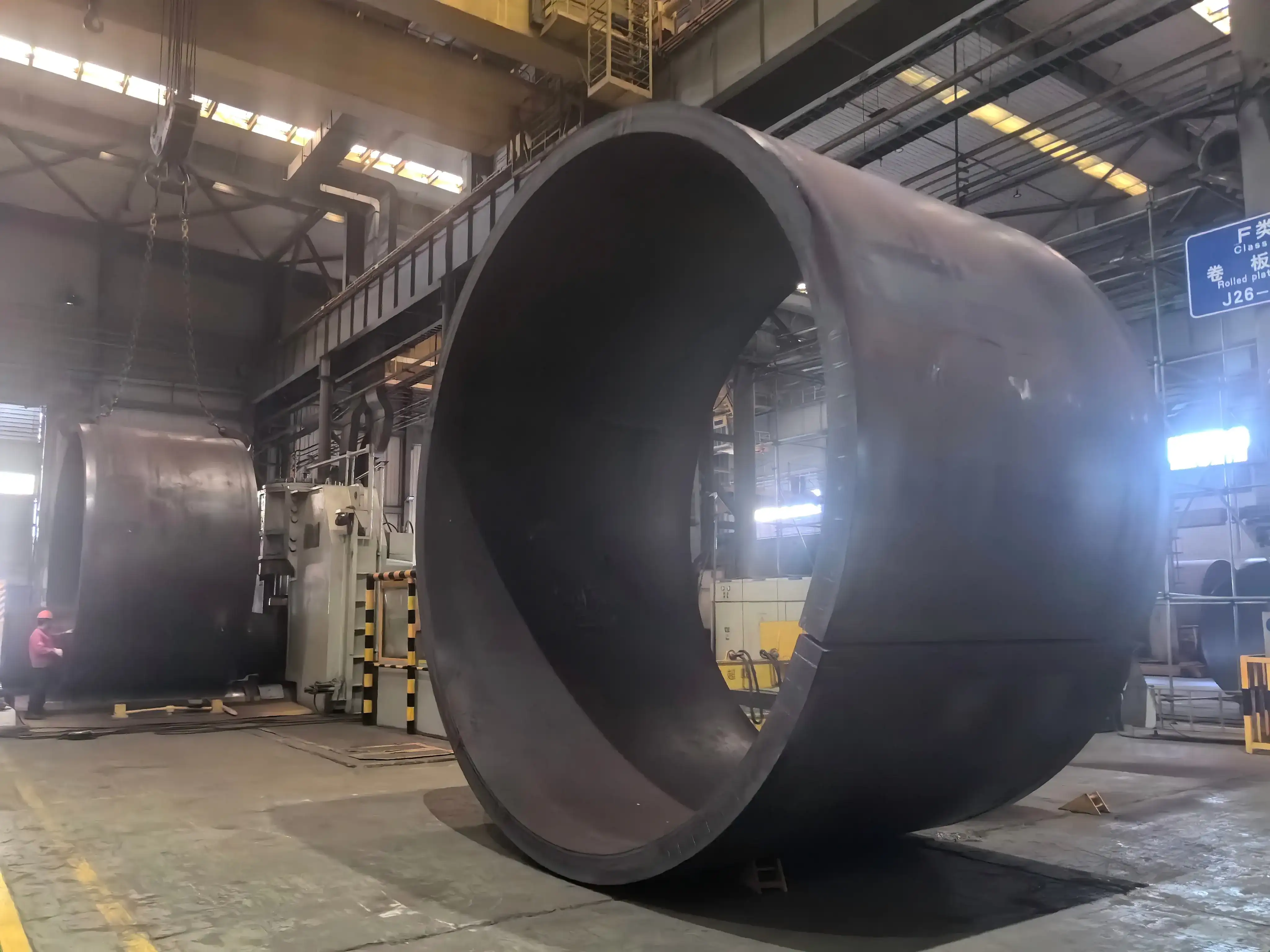
EZHONG heavy-duty 3-roll and 4-roll plate rolling machines are designed for:
● Thick steel plate processing
● Large diameter shell forming
● High-strength material applications
Supporting pressure vessel manufacturers with reliable forming performance.
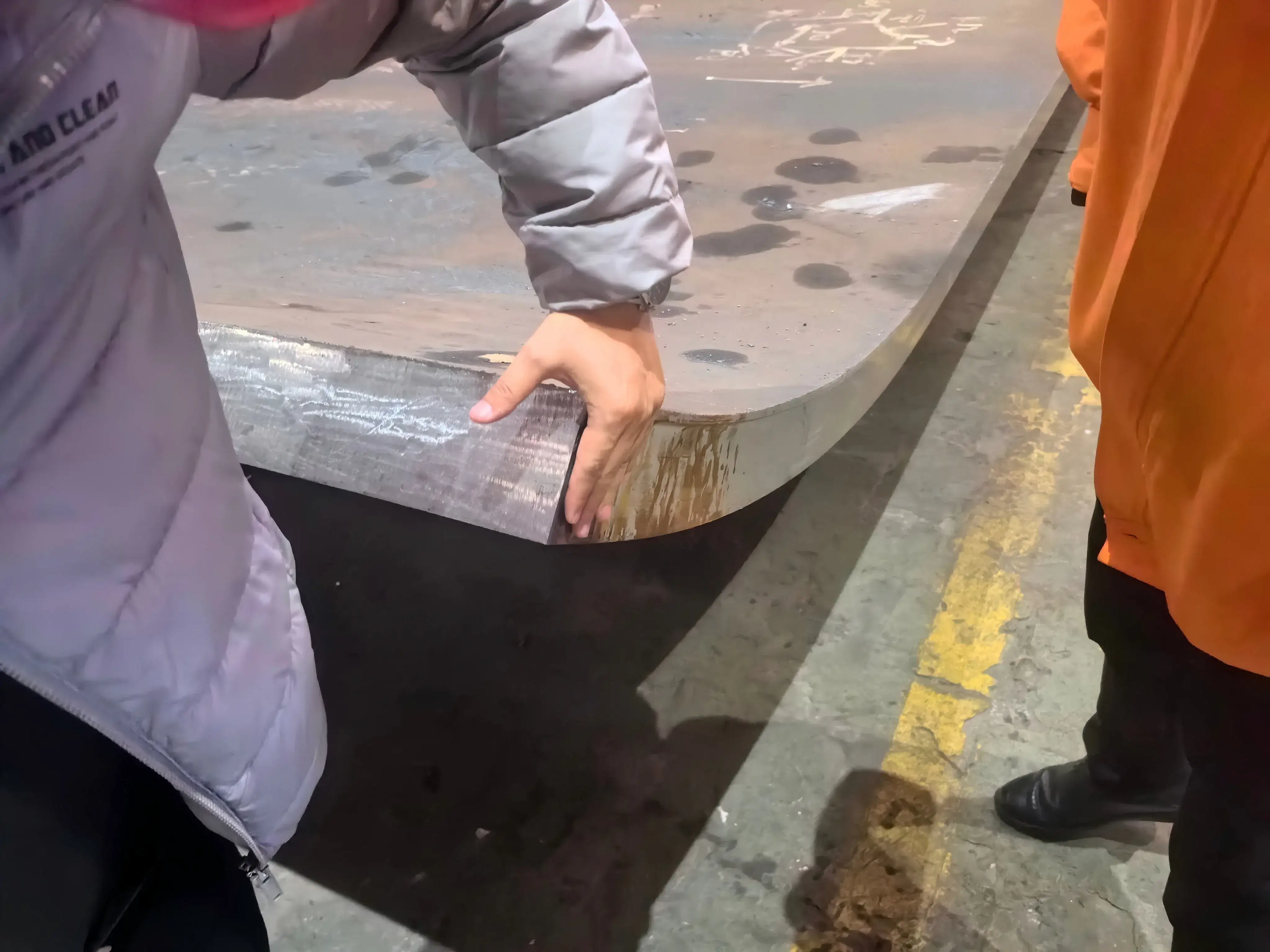
Through optimized mechanical design and hydraulic control systems, EZHONG machines provide:
● Accurate pre-bending
● Stable cylindrical forming
● Excellent roundness control
● Reduced manual correction
Improving welding efficiency and overall production quality.
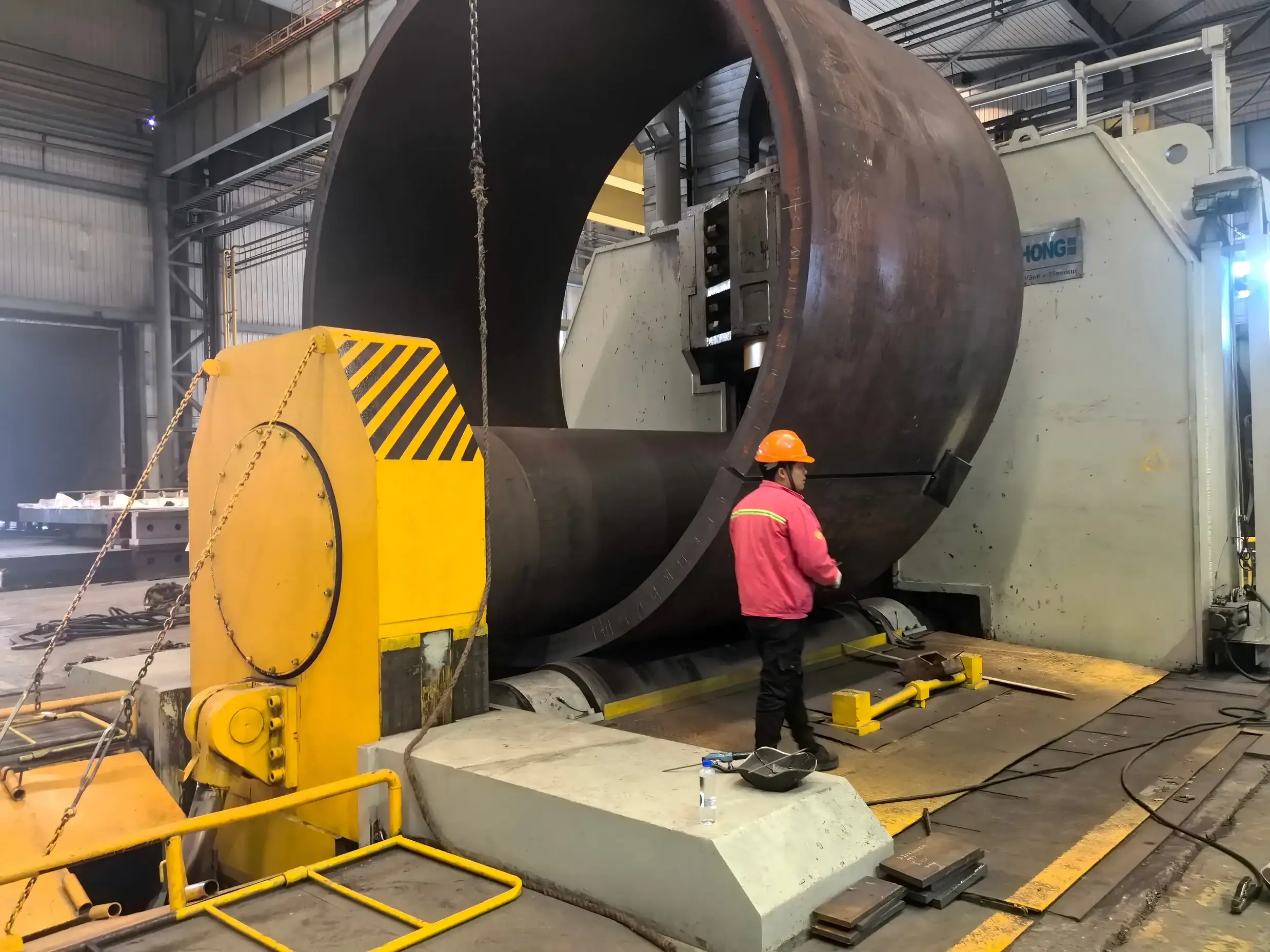
Solutions can be configured according to:
● Material grade
● Plate thickness
● Plate width
● Vessel diameter
● Production requirements
Suitable for both standard vessels and customized heavy equipment manufacturing.
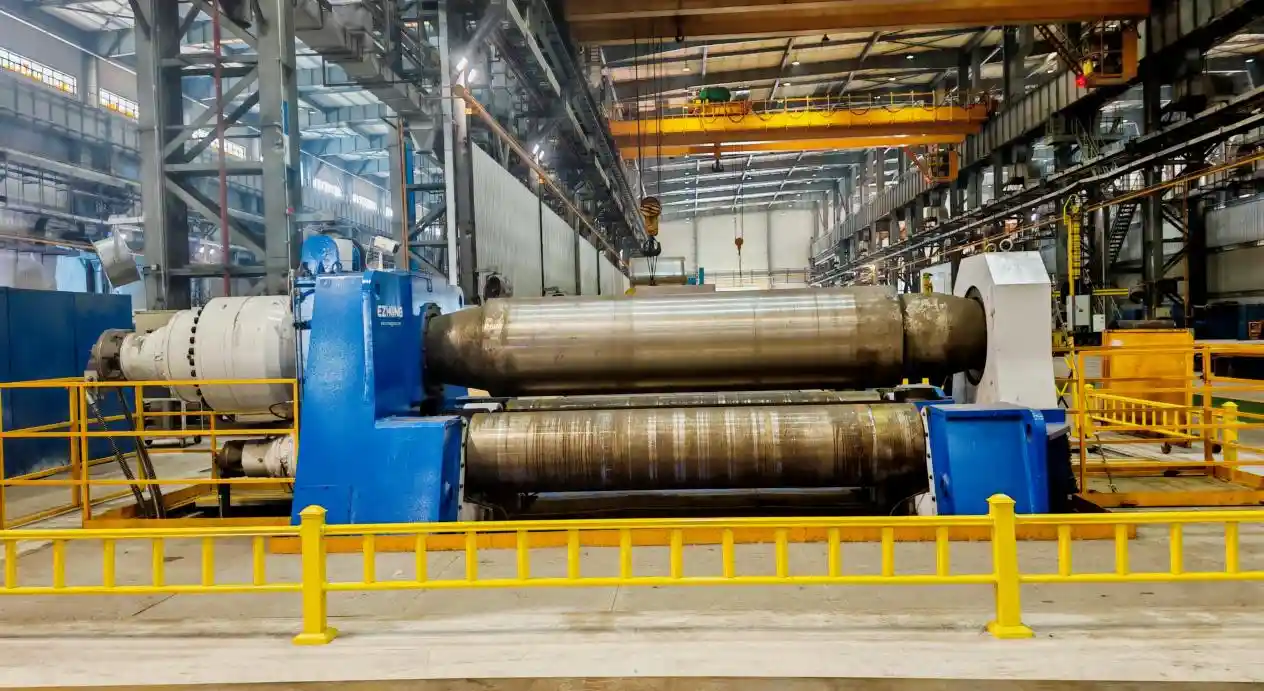
Recommended for:
● Pressure vessel shells
● Storage tanks
● Heat exchanger shells
● Medium and heavy plate applications
Advantages:
● High forming accuracy
● Excellent pre-bending performance
● Reduced plate handling
● Efficient production process
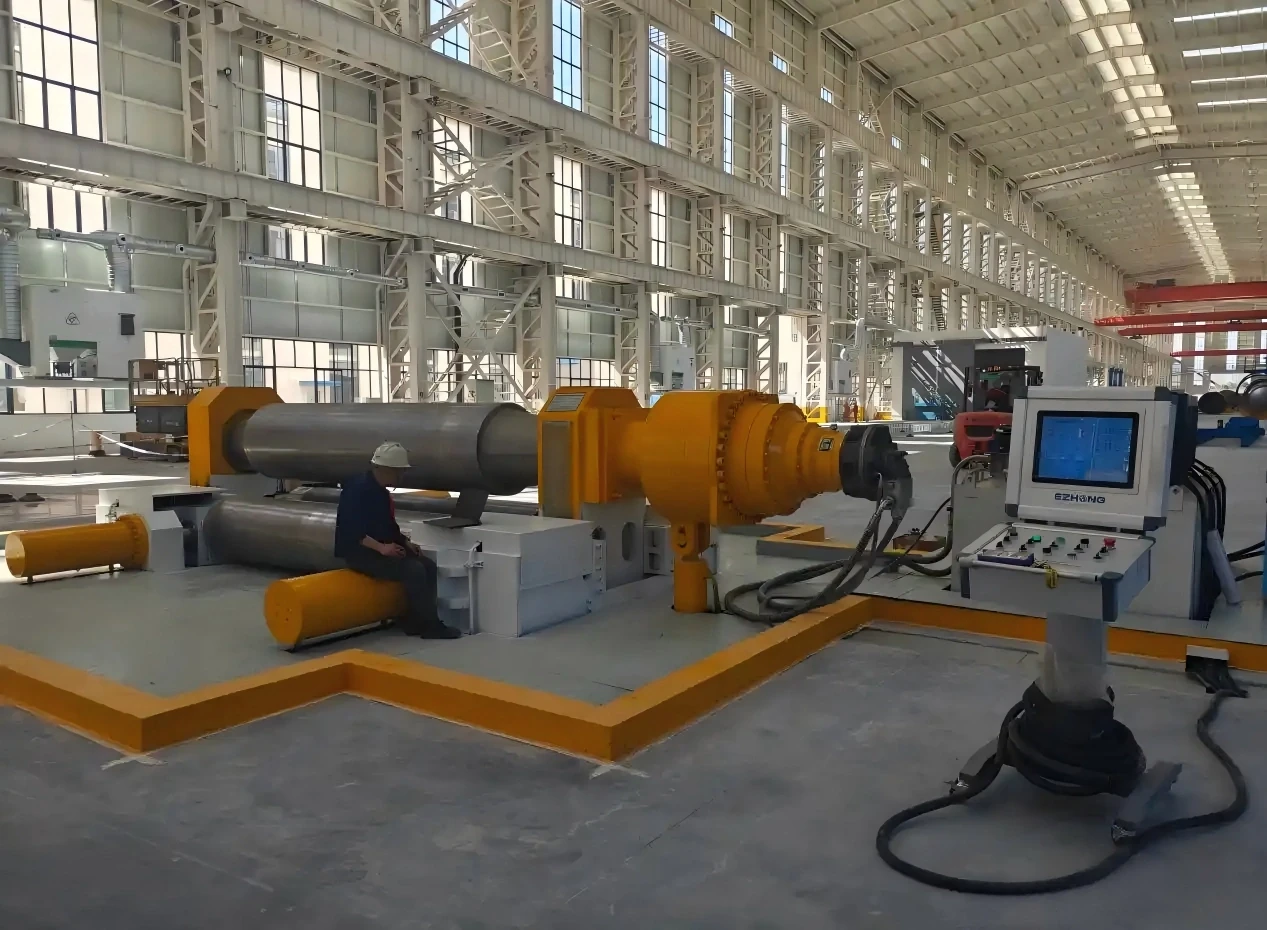
Recommended for:
● Large diameter pressure vessels
● Heavy storage tanks
● Oversized cylindrical components
Advantages:
● Extremely high rolling force
● Suitable for ultra-heavy plates
● Reliable performance in demanding industries
Applications include:
Suitable for manufacturing:
Supporting fabrication of:
Applications include:
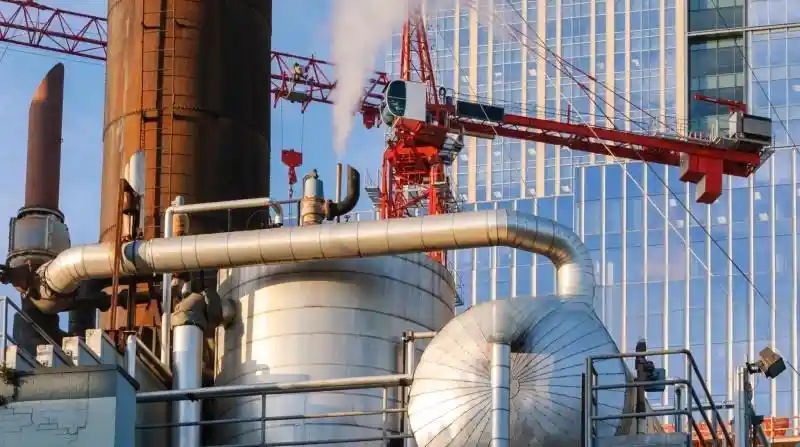
EZHONG plate rolling machines have been successfully applied in industries requiring high-precision cylindrical forming, including:
● Pressure vessel manufacturing
● Petrochemical equipment production
● Nuclear power equipment fabrication
● Boiler manufacturing
● Heavy energy equipment projects
Our equipment supports manufacturers worldwide in producing reliable pressure equipment components with consistent forming quality.
Pressure vessel manufacturing involves forming cylindrical shells, cones, storage tank sections, heat exchanger shells, reactor components, and other pressure-retaining parts. Depending on the design, these components may require plate rolling, head forming, flanging, pressing, and other forming processes.
Plate rolling determines the basic geometry of the vessel shell and directly affects its diameter, roundness, longitudinal seam fit-up, and subsequent welding. Consistent and controlled forming is therefore essential for achieving the required dimensional accuracy and fabrication quality.
Thick and high-strength plates require significantly higher forming forces and greater machine rigidity. Material yield strength, plate thickness and width, required diameter, bending radius, springback, and forming sequence must all be considered to achieve stable and repeatable results.
Accurate roundness helps maintain the designed geometry of the vessel and improves the fit-up of longitudinal seams, circumferential joints, heads, flanges, and other components. Good control of shell geometry can reduce correction work and support more consistent welding and assembly.
Pressure vessels may use carbon steel, stainless steel, and various high-strength or alloy steels depending on the service conditions. Differences in yield strength, work hardening, and springback can significantly affect the required forming force and process parameters, so the material grade should be considered when selecting forming equipment.
Accurate shell geometry improves longitudinal seam alignment and the fit-up between shells, heads, flanges, and other components. Better forming accuracy can reduce manual adjustment and correction, helping create more stable conditions for subsequent welding, inspection, and assembly.
Selection should consider plate thickness and width, material yield strength, minimum and maximum shell diameter, required roundness, plate weight, production volume, forming sequence, and required level of automation. The machine should be evaluated according to the complete production range rather than maximum plate thickness alone.
Controlled plate forming, CNC process management, appropriate plate supports, and accurate positioning can improve repeatability while reducing manual correction and forming time. For manufacturers producing different vessel sizes and materials, a flexible forming solution can also help maintain stable quality across a wider production range.
From standard pressure vessels to large-scale storage tanks and heavy industrial equipment, EZHONG provides customized plate rolling solutions based on your material, dimensions, and production requirements. Contact EZHONG engineers to discuss your pressure equipment manufacturing project.