



Advanced Plate Rolling Solutions for Onshore & Offshore Wind Towers
EZHONG provides heavy-duty plate rolling and forming solutions for wind energy equipment manufacturers, enabling precise fabrication of wind tower sections, foundation monopiles, transition pieces, and other large cylindrical structures. With decades of experience in heavy plate forming, EZHONG machines are designed to process high-strength steel plates, large diameters, and demanding wind power manufacturing requirements, ensuring excellent roundness, welding quality, and structural reliability for modern wind energy projects.
● Large diameters up to 16 meters
● Heavy plate thickness for offshore and foundation structures
● High-strength steels with yield strength up to 690 MPa and above
● Strict requirements for roundness, welding alignment, and assembly accuracy
Whether producing onshore wind towers, offshore tower sections, monopile foundations, or transition structures, stable plate forming is essential to ensure safe operation throughout the equipment lifecycle.
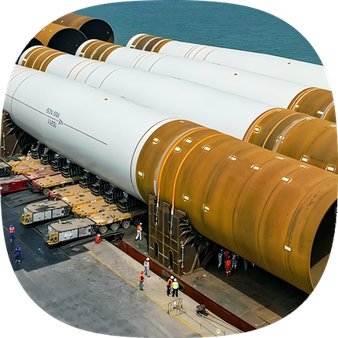
Modern wind energy structures increasingly use high-strength steel grades to reduce weight while maintaining structural performance. These materials require powerful forming capacity and optimized rolling processes.
Large wind tower sections require accurate cylindrical geometry to guarantee: Proper flange connection, Welding quality, Tower section alignment, Structural stability. Poor roundness can lead to difficulties during assembly and increased welding correction work.
Thick plates and high-strength materials are sensitive to deformation and springback during forming. A stable rolling process is essential to achieve consistent geometry and reduce post-processing.
Wind tower manufacturers need reliable equipment capable of continuous production while reducing manual adjustment and improving manufacturing efficiency.
EZHONG provides customized plate rolling solutions specifically developed for large-scale wind tower and offshore wind structure production.
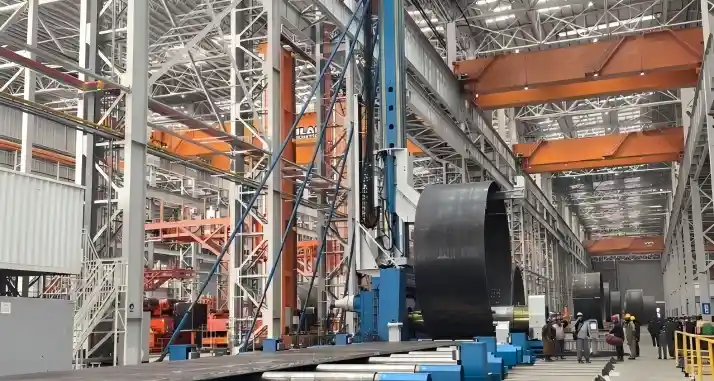
EZHONG heavy-duty 3-roll and 4-roll plate rolling machines are capable of processing:
● Thick steel plates
● High-strength materials
● Large diameter cylindrical sections
Suitable for wind tower shells, monopiles, transition pieces, and other heavy cylindrical components.
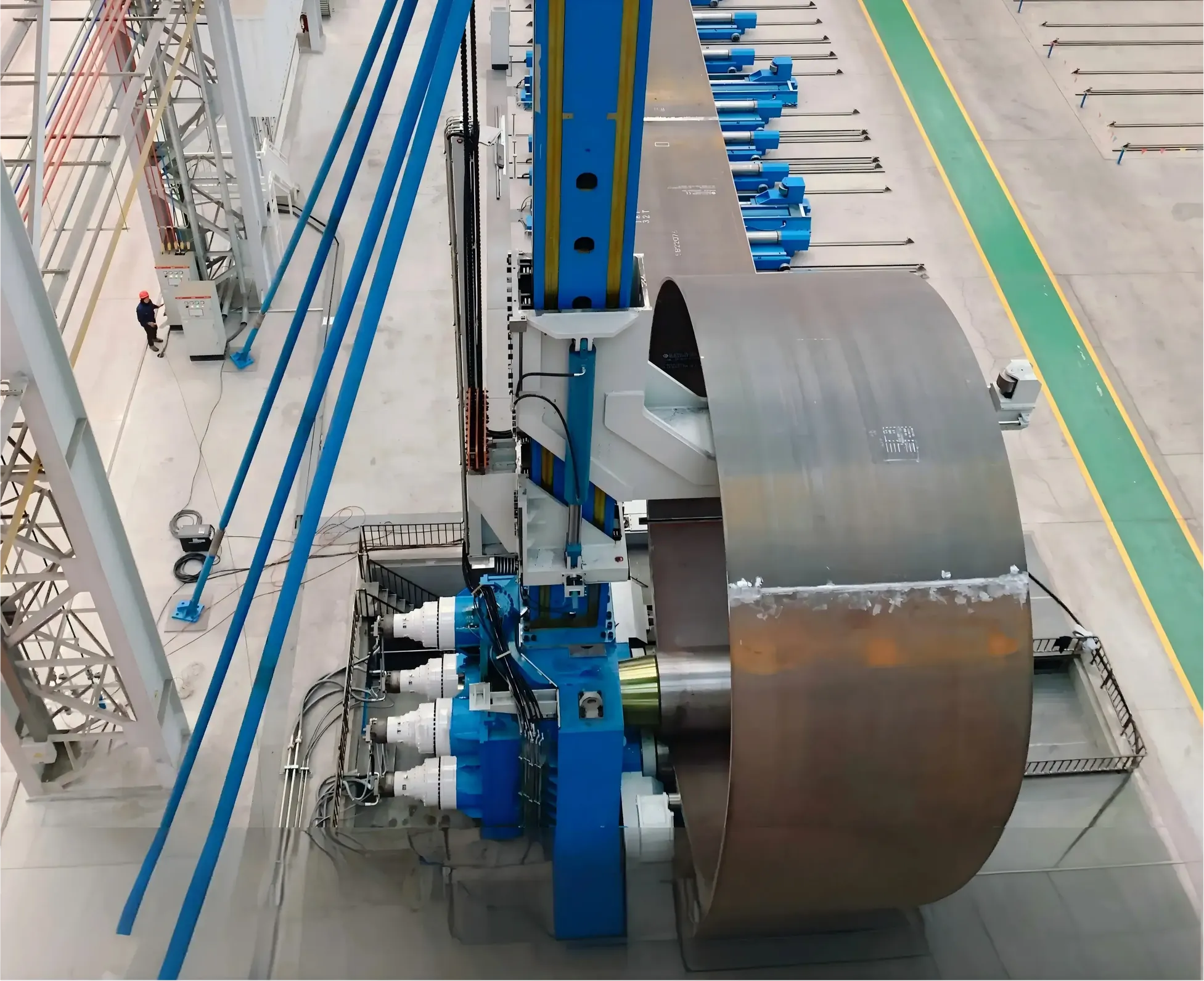
Advanced hydraulic systems, rigid machine structures, and optimized rolling processes help achieve:
● Excellent roundness control
● Stable plate forming
● Reduced correction work after rolling
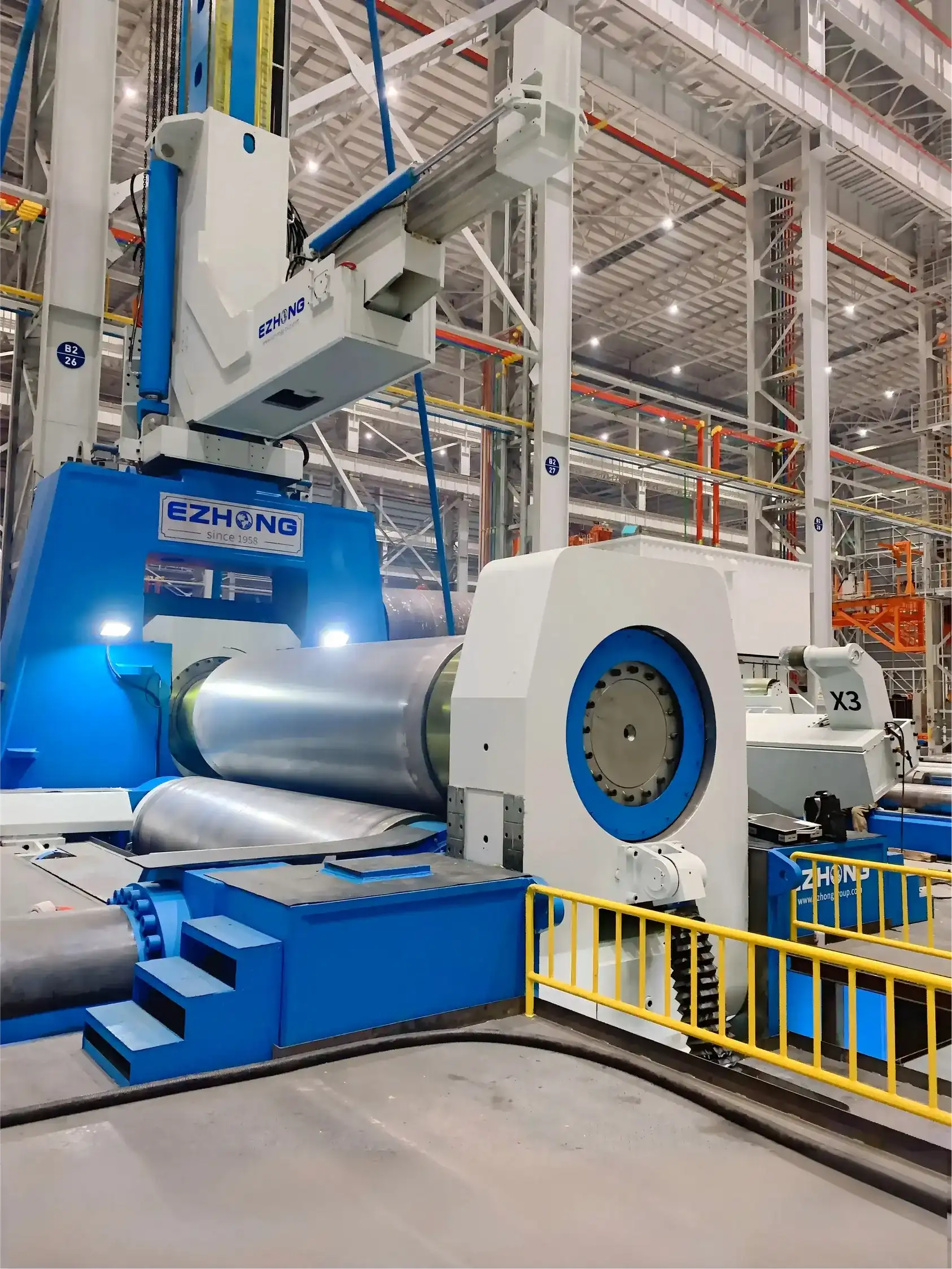
Machines can be configured according to:
● Plate thickness
● Plate width
● Material grade
● Tower diameter
● Production capacity requirements
Supporting both customized manufacturing and large-scale production lines.
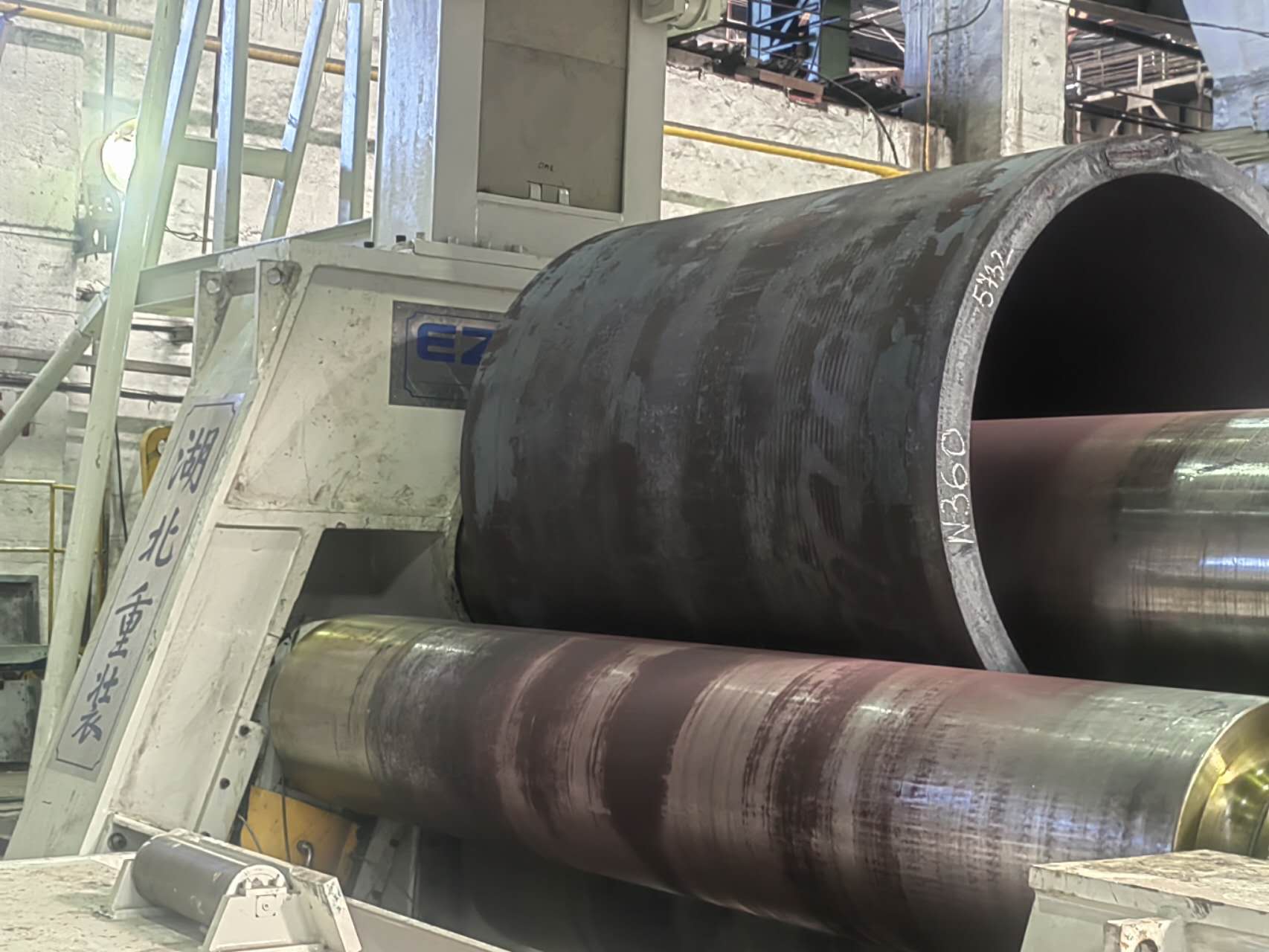
Recommended for:
● Offshore wind towers
● Heavy plate applications
● High-strength steel forming
Advantages:
● High automation level
● Excellent pre-bending capability
● Accurate cylindrical forming
● Reduced operator dependence
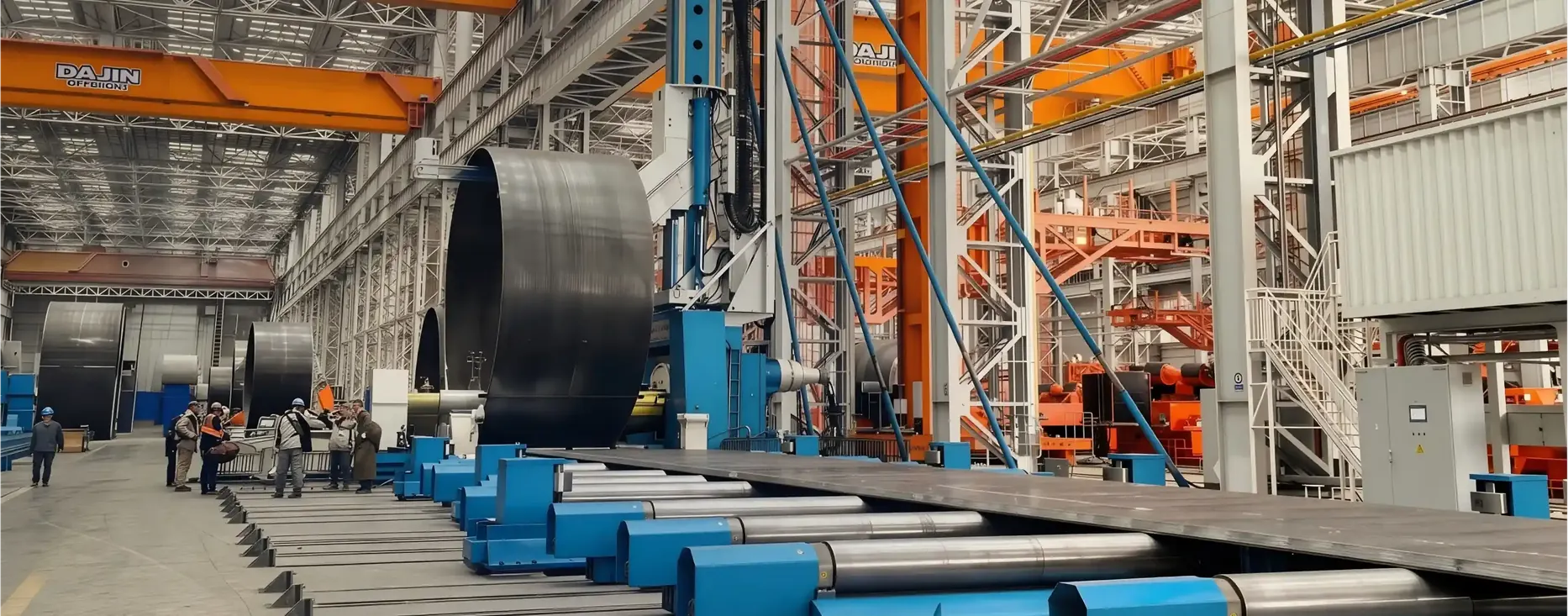
Recommended for:
● Large diameter wind tower sections
● Monopile foundations
● Heavy steel structures
Advantages:
● Extremely strong rolling capacity
● Suitable for oversized workpieces
● Reliable operation for heavy industries
Rolling steel plates into cylindrical tower segments for:
Suitable for manufacturing:
Applications include:
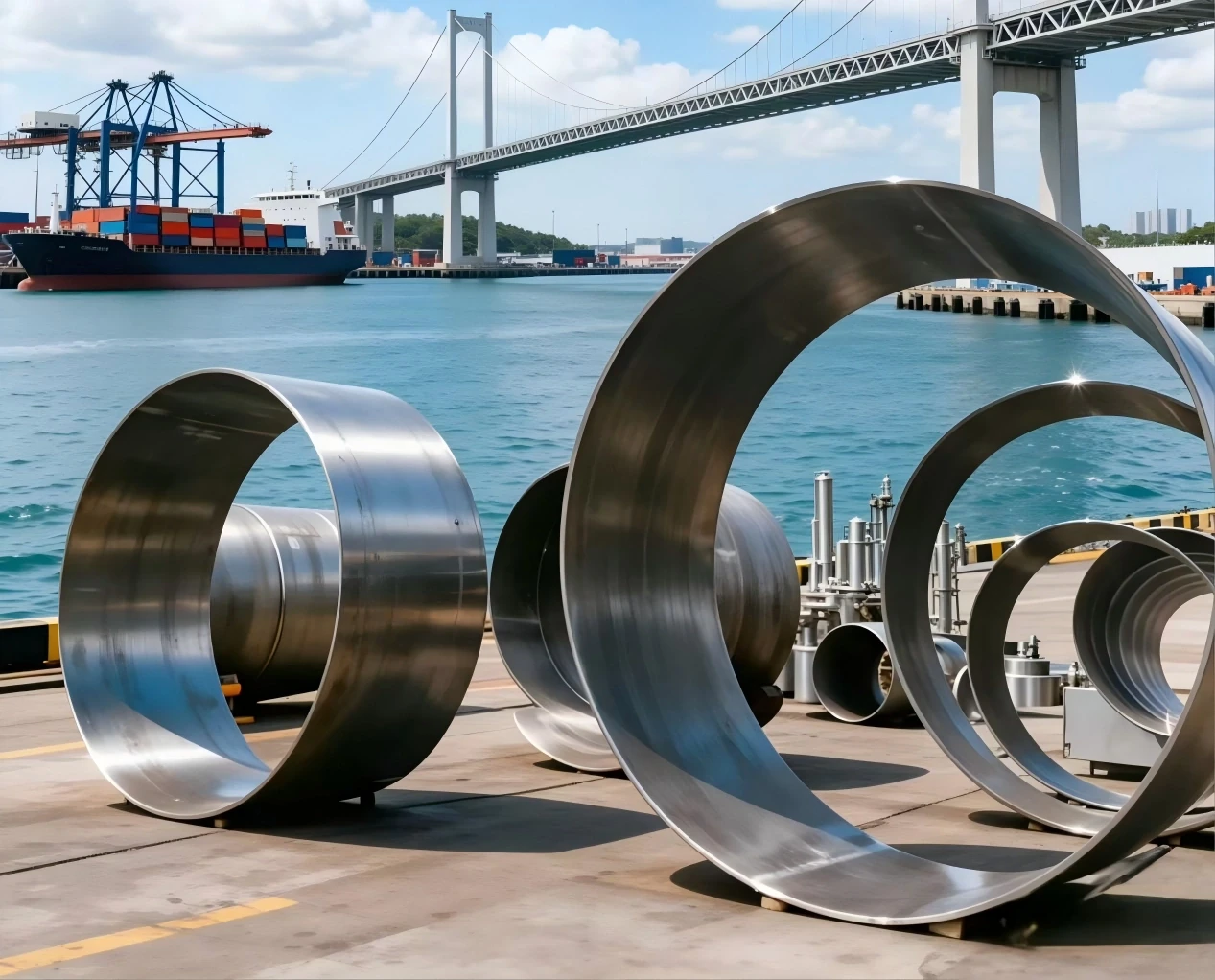
EZHONG plate rolling machines have been widely applied in industries requiring large-scale cylindrical forming, including:
● Wind power equipment manufacturing
● Shipbuilding
● Pressure vessel production
● Heavy steel fabrication
● Energy equipment manufacturing
Our machines support manufacturers worldwide in producing large diameter and high-strength steel components with reliable forming performance.
Wind tower sections are typically formed as cylindrical or conical shell segments from welded steel plates. Depending on the tower design, different diameters, wall thicknesses and cone angles may be required along the tower height.
Three-roll plate rolls provide strong forming capability, precise pre-bending and good control of the final shell geometry. Their flexible rolling geometry is particularly suitable for producing large cylindrical and conical tower sections from thick steel plates.
Machine selection should consider plate thickness and width, material yield strength, required shell diameter, cone angle, plate weight, production volume and required forming accuracy. The machine should be selected according to the actual production range rather than a single maximum plate specification.
Pre-bending forms the plate ends before the main rolling operation, helping reduce the unformed flat length at the longitudinal joint. Proper pre-bending improves edge fit-up and can reduce correction work before welding.
A conical shell has different bending radii across its width, so the plate must be formed with controlled geometry rather than a uniform cylindrical radius. Accurate plate positioning and coordinated roll adjustment are important for achieving the required cone angle and edge alignment.
Higher-strength structural steels generally require greater forming force than lower-strength steels of the same thickness. Therefore, yield strength should be considered together with plate thickness, width and required diameter when determining the actual rolling capacity of a machine.
Accurate and consistent shell geometry improves longitudinal seam fit-up and helps maintain uniform joint conditions during welding. Better rolling accuracy can reduce adjustment and correction work and contribute to more stable downstream fabrication.
Productivity depends not only on rolling speed, but also on plate loading, positioning, pre-bending, rolling passes, shell handling and inspection. Appropriate side or top supports, plate handling equipment, CNC control and measurement systems can reduce manual intervention and improve repeatability in series production.
Whether you are manufacturing onshore wind towers, offshore monopiles, or large welded cylindrical structures, EZHONG can provide a customized plate rolling solution based on your material, size, and production requirements. Contact EZHONG engineers today to discuss your wind energy manufacturing project.