| Item | Content |
|---|---|
| Customer | Krasny Kotelshchik |
| Country | Russia |
| Industry | Boiler Manufacturing |
| Equipment | EZW12-120x4000 |
| Machine Type | Fully Hydraulic 4-Roll Plate Rolling Machine |
| Maximum Plate Thickness | 120 mm |
| Maximum Plate Width | 4,000 mm |
| Maximum Plate Yield Strength | 800 MPa |
| Maximum Upper-Roll Force | 20,000 kN |
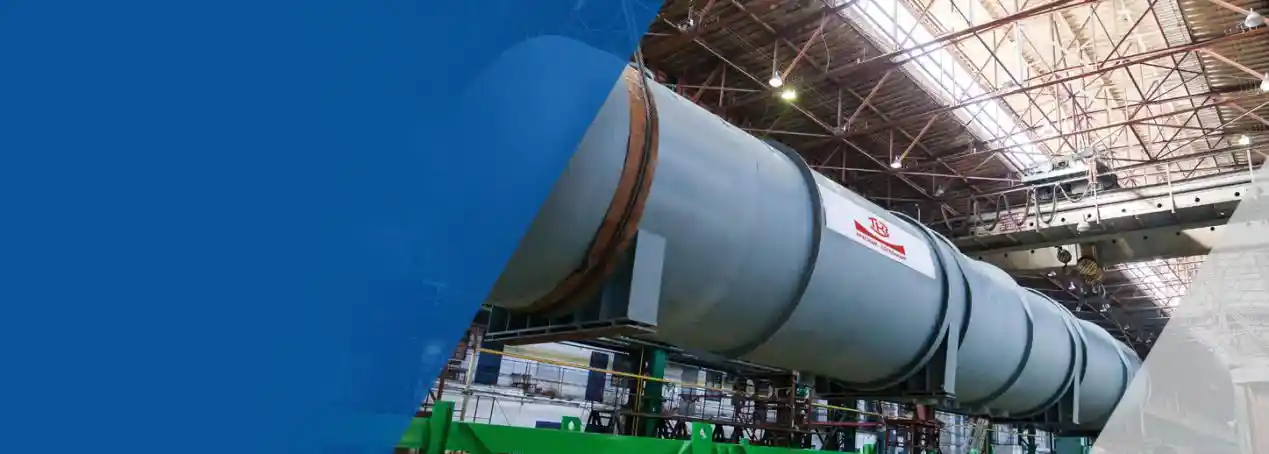
Krasny Kotelshchik, officially the Taganrog Boiler-Making Works, is a major Russian manufacturer of power-generation and boiler equipment. The company develops and manufactures steam boilers, heat recovery steam generators and heat-exchange equipment for thermal and nuclear power applications.
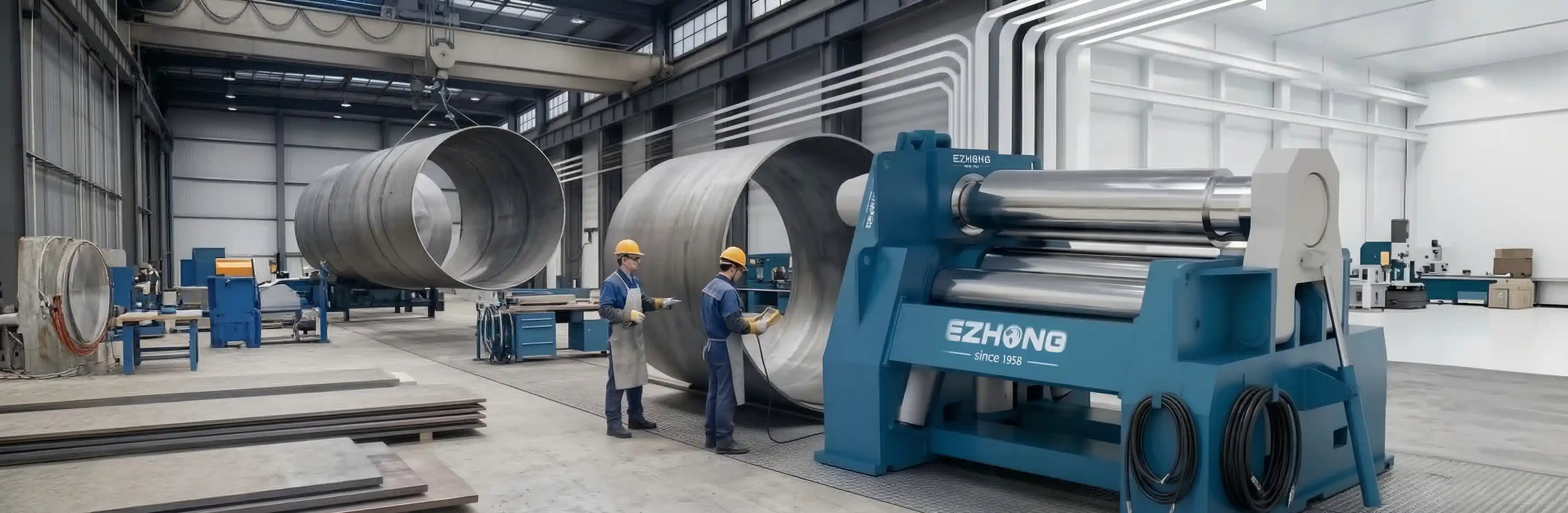
For its heavy boiler manufacturing operations, Krasny Kotelshchik selected EZHONG's EZW12-120x4000 Four-Roll Plate Rolling Machine.
The machine is designed for demanding plate forming applications, with a maximum rolling thickness of 120 mm, maximum plate width of 4,000 mm, and material yield strength capability up to 800 MPa.
For this project, the customer required a solution capable of providing:
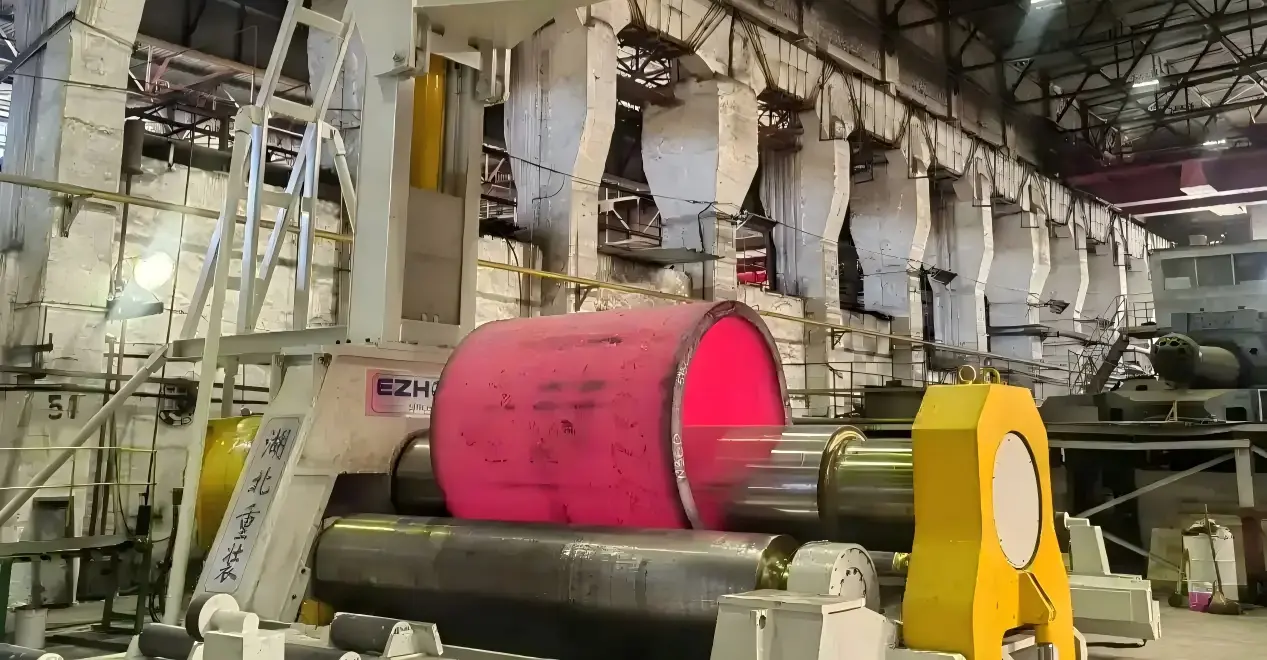
EZHONG supplied the EZW12-120x4000 Fully Hydraulic Four-Roll Plate Rolling Machine with a slant-down structural configuration.
| Item | Specification |
|---|---|
| Machine Model | EZW12-120x4000 |
| Machine Type | Fully Hydraulic Four-Roll Plate Rolling Machine |
| Plate Yield Strength | 245 / 360 / 800 MPa |
| Maximum Rolling Thickness | 120 / 90 / 70 mm |
| Maximum Pre-Bending Thickness | 100 / 70 / 50 mm |
| Maximum Plate Width | 4,000 / 4,000 / 2,200 mm |
| Minimum Workpiece Diameter at Full Load | Ø3,000 mm |
| Remaining Straight Edge After Pre-Bending | 2-2.5 T |
| Upper Roll Diameter | Ø940 mm |
| Lower Roll Diameter | Ø830 mm |
| Side Roll Diameter | Ø720 mm |
| Rolling Speed | Approx. 3.5 m/min |
| Maximum Upper-Roll Force | 20,000 kN |
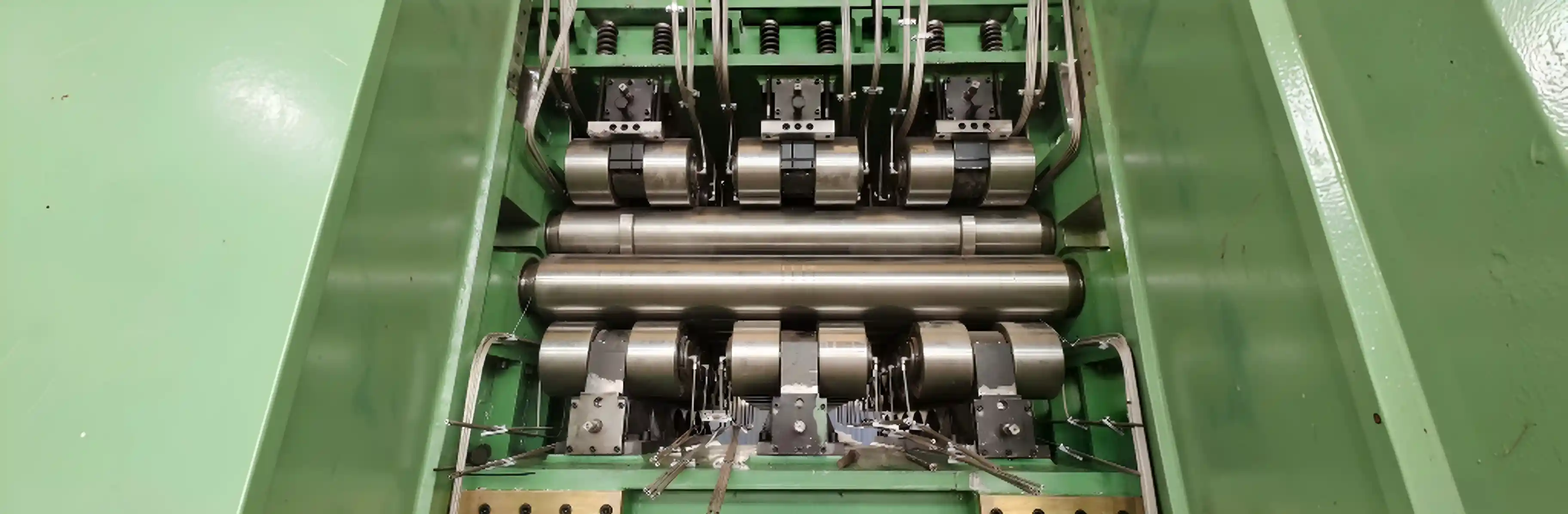
The EZW12-120×4000 adopts a fully hydraulic four-roll structure. The lower and side rolls are hydraulically positioned, while the machine uses hydraulic drive and electro-hydraulic control for the rolling process. This configuration provides controlled roll positioning for heavy plate pre-bending and rolling.
The machine provides a maximum upper-roll force of 20,000 kN and a maximum upper-roll drive torque of 950 kN·m. This high-capacity configuration is designed for heavy plate forming applications requiring substantial forming force.
For plates with a yield strength of 245 MPa, the specified maximum rolling thickness reaches 120 mm. For higher-strength materials, the rated maximum thickness is adjusted accordingly: 245 MPa → 120 mm, 360 MPa → 90 mm, 800 MPa → 70 mm.
The specified remaining straight edge after pre-bending is 2-2.5T. The four-roll configuration and close positioning of the plate relative to the forming rolls help reduce the unformed straight section at the plate ends.
All four working rolls are specified as 42CrMo alloy steel. Quenched and tempered hardness: HB215-300; surface hardness: HRC50-55. This provides the mechanical strength and surface hardness required for heavy plate forming.
The side rolls can be adjusted independently to support cone bending. The machine's maximum cone pressure is specified as ≤400 tons, providing additional forming capability for conical boiler and pressure equipment components.
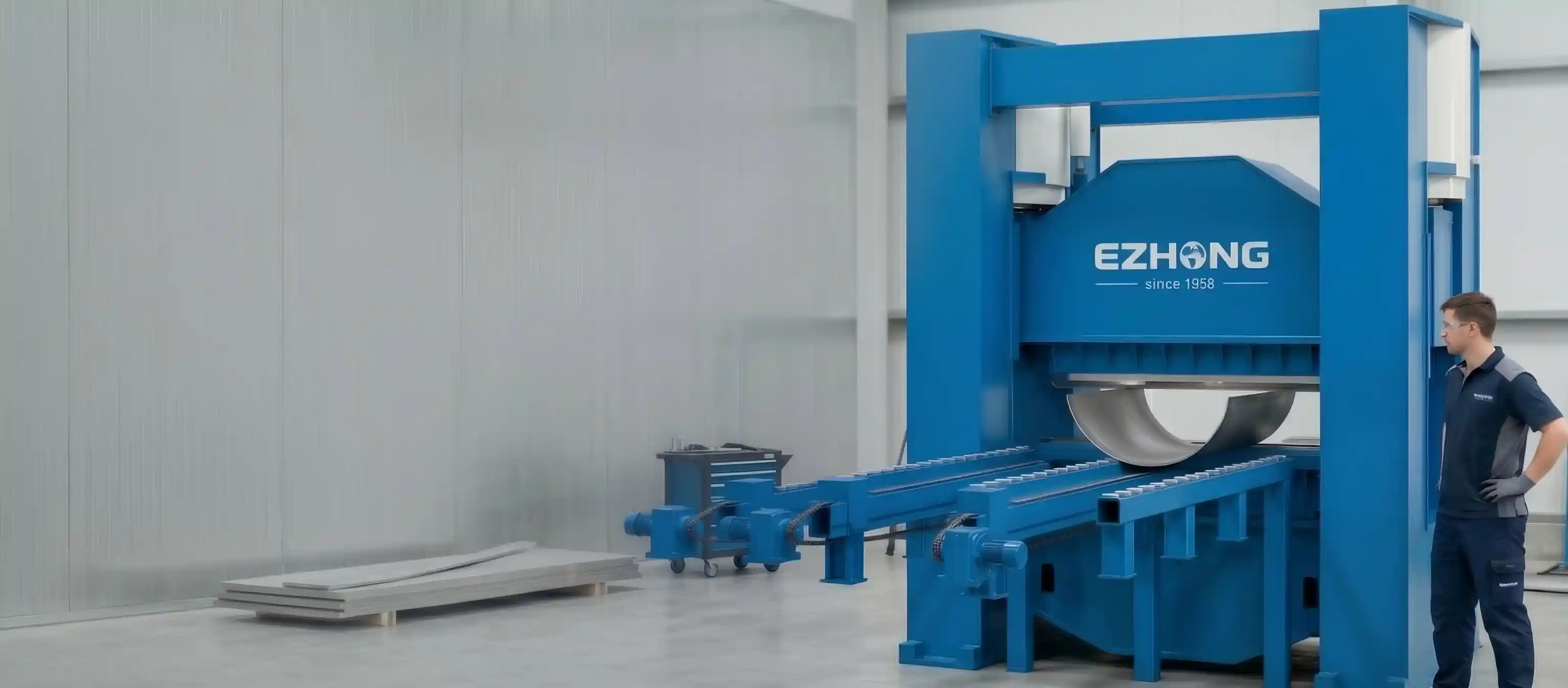
The tipping device consists of a tipping seat and hydraulic cylinder. The hydraulic tipping system allows the finished workpiece to be removed along the roll axis, improving handling of large cylindrical components after rolling.
The electrical control system consists of an electrical control cabinet and operator console. The system uses control buttons, indicator lights and a programmable touch display to monitor and control the machine's rolling operation.
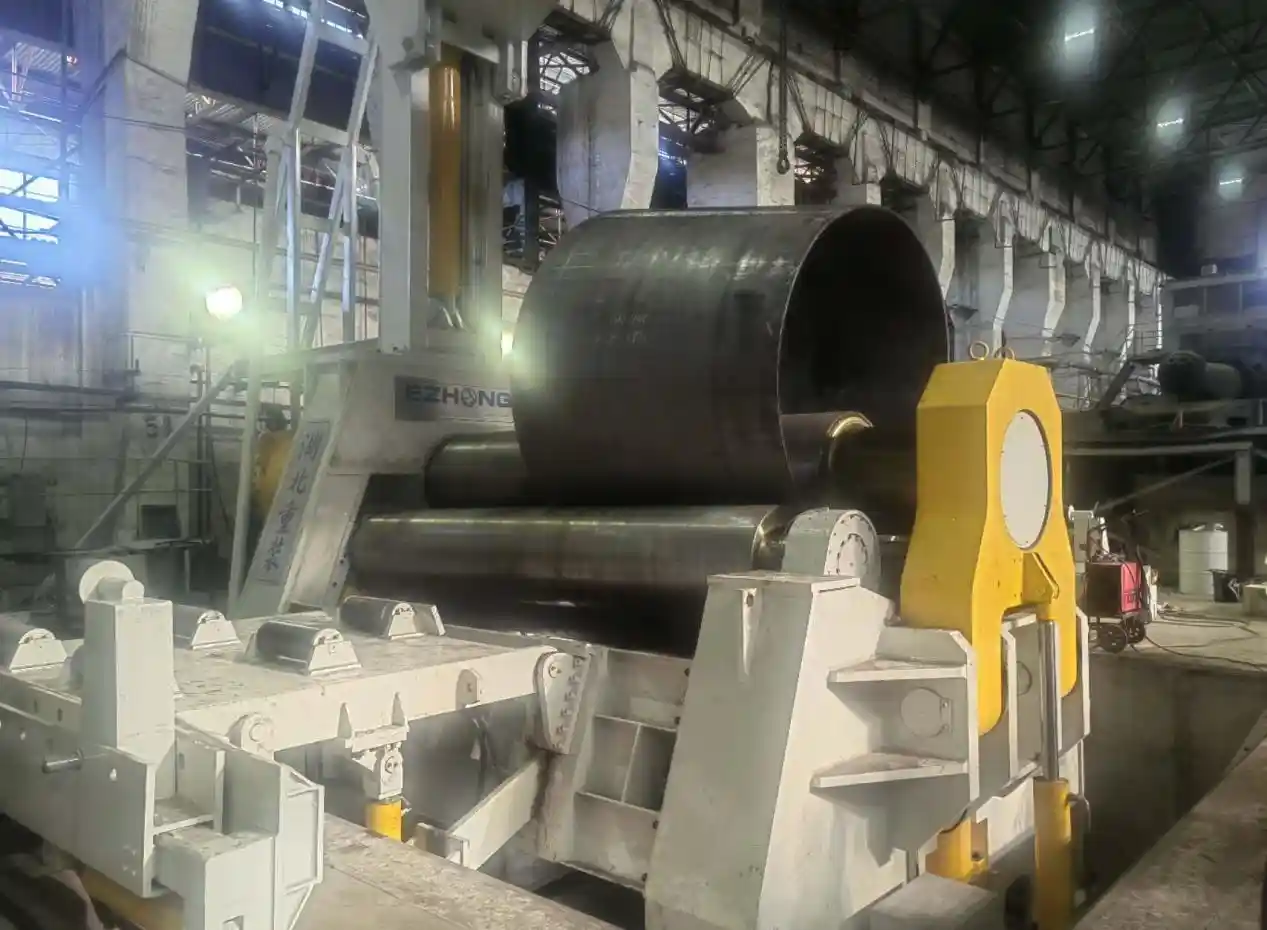
Commissioning Rolling
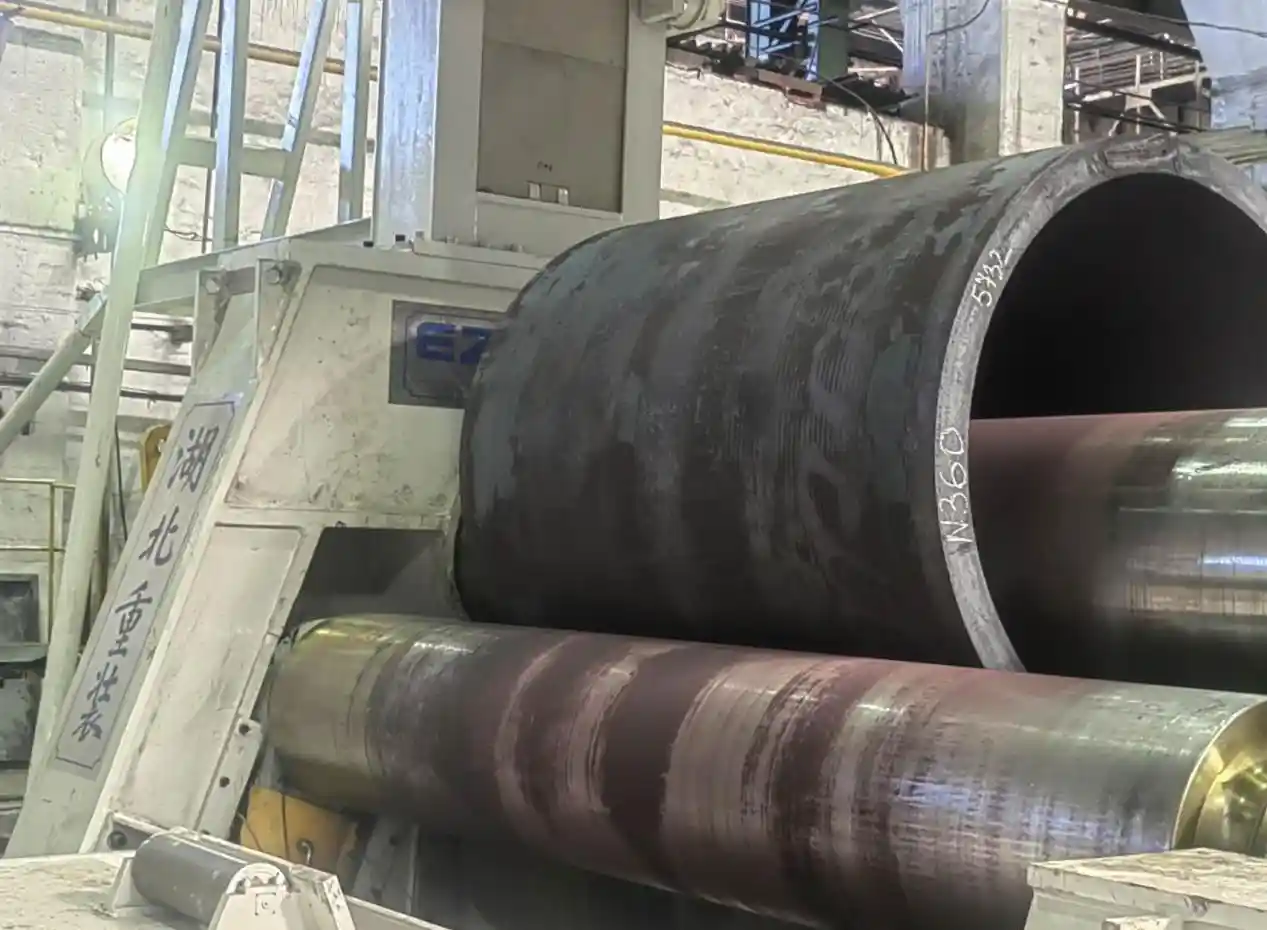
Trial Forming
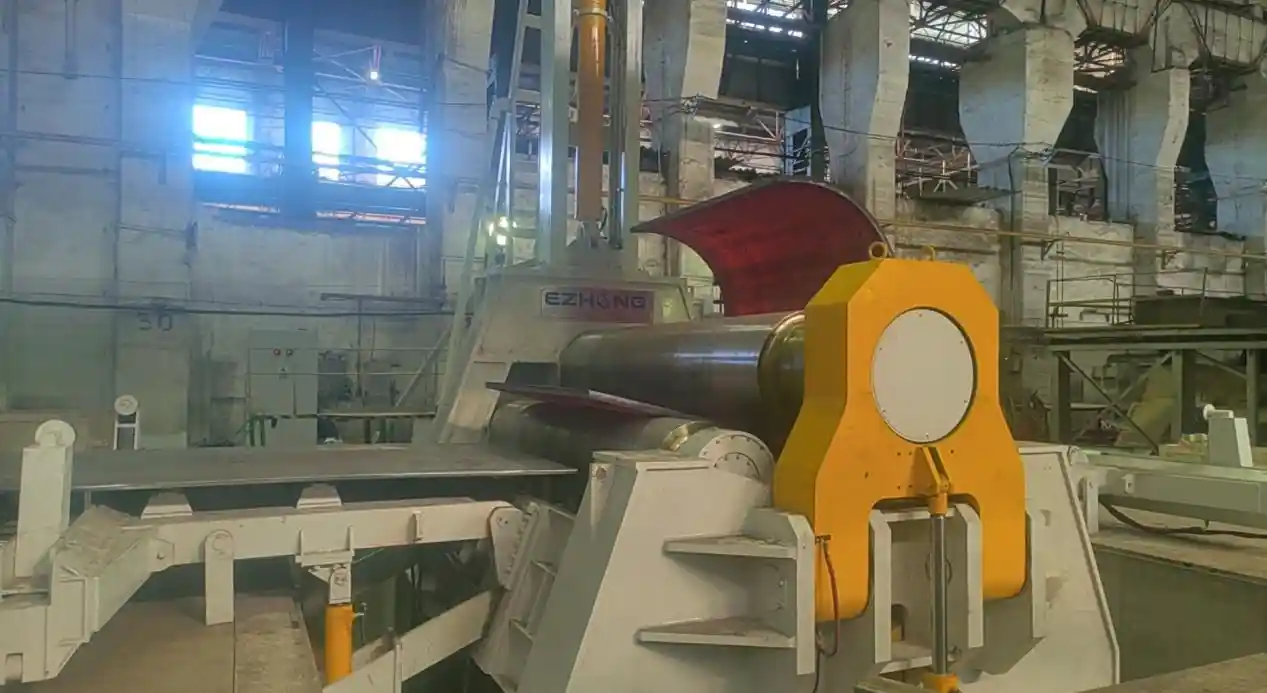
Trial Operation
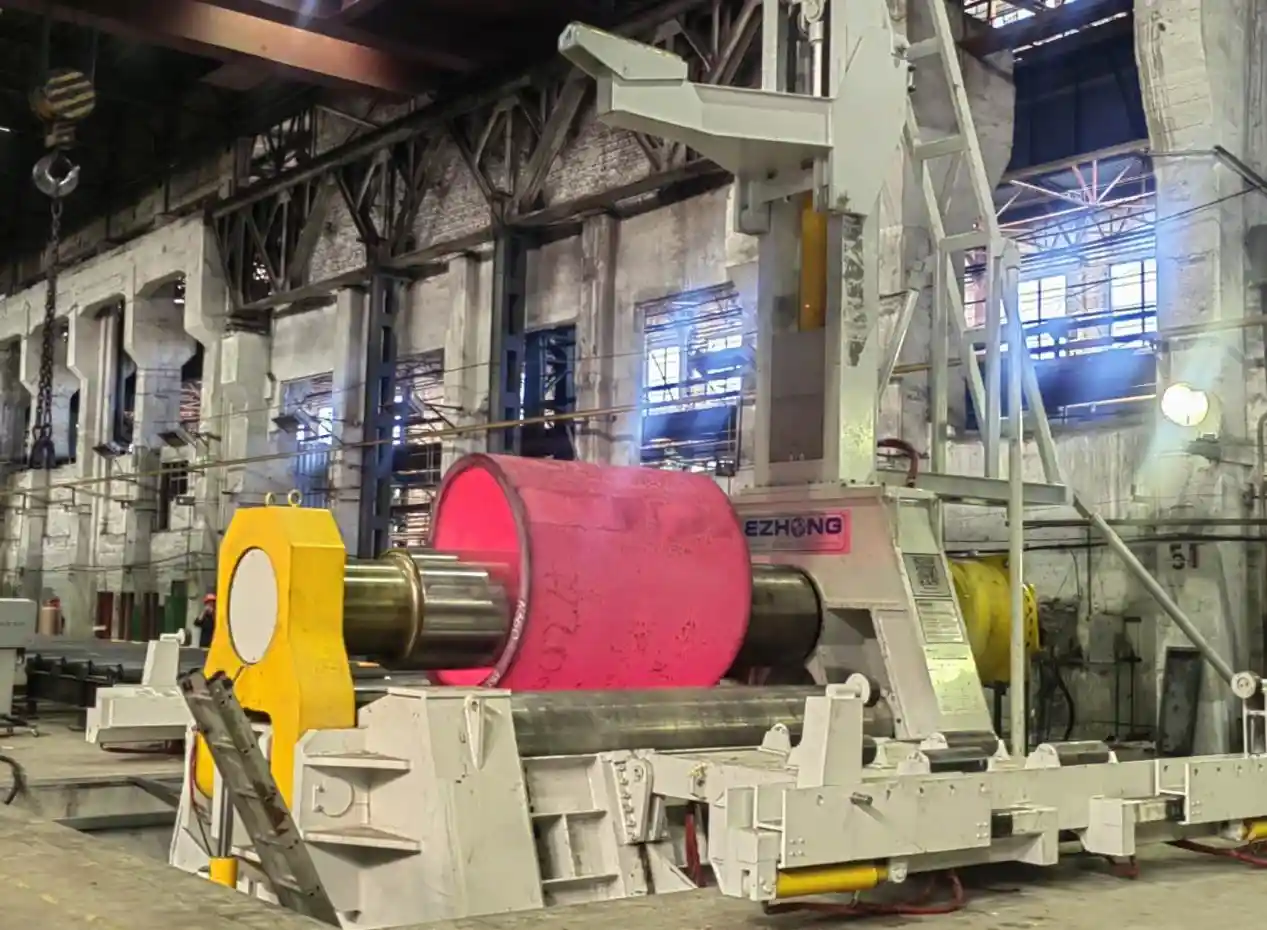
Hot rolling
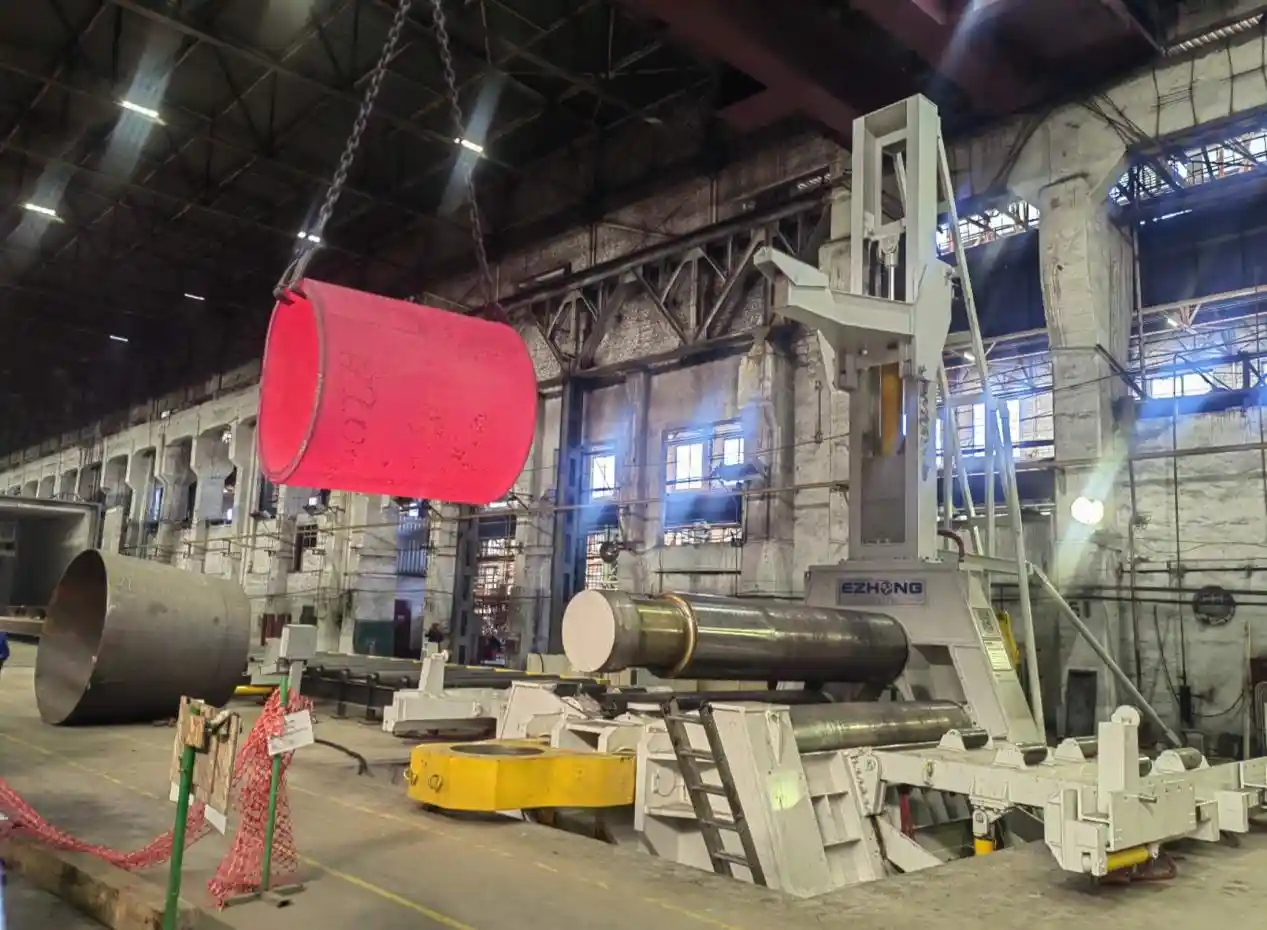
Hot Shell Handling
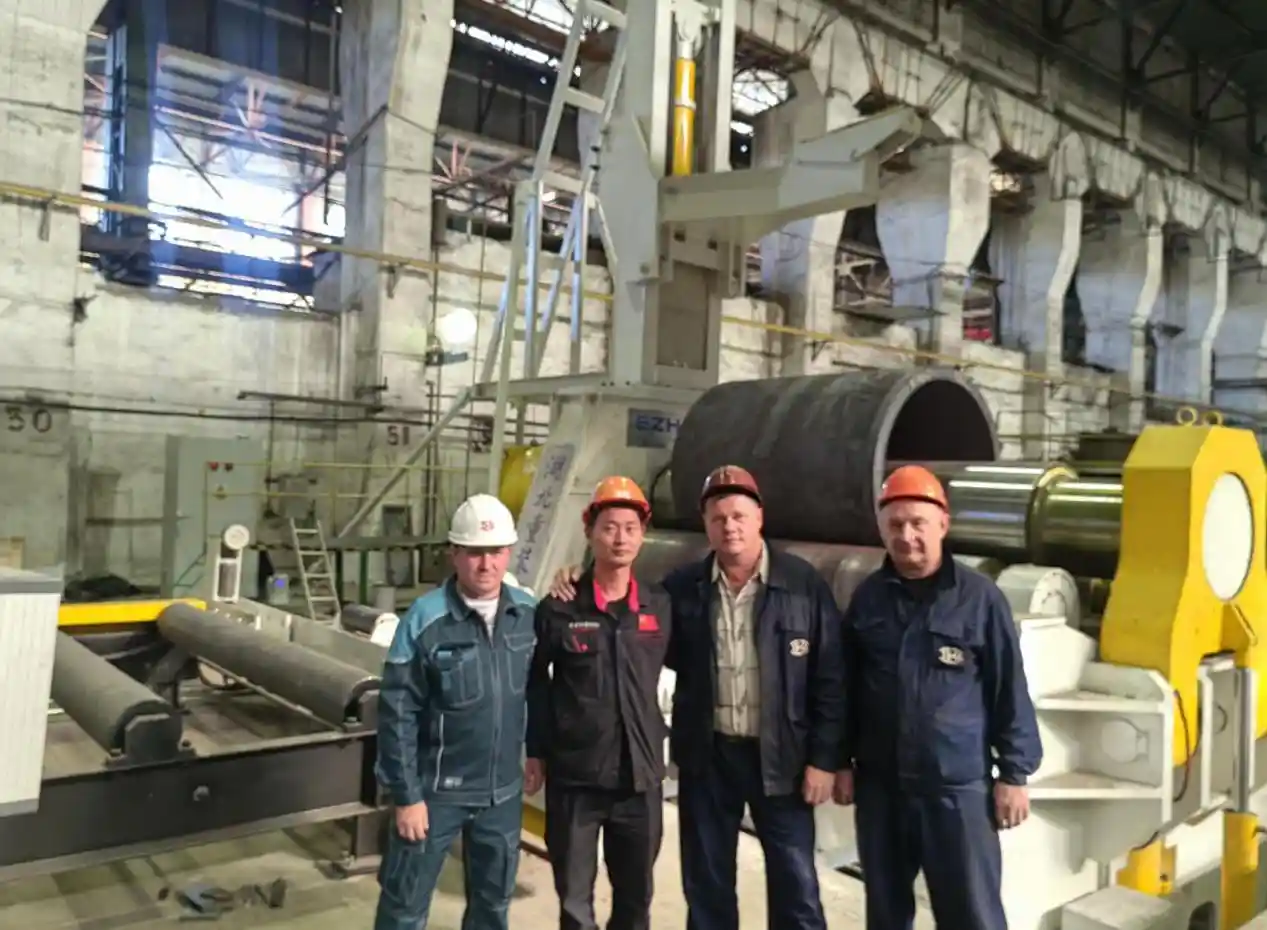
Acceptance Check
From plate thickness and material strength to rolling diameter, working width and cone forming requirements, heavy boiler components require a properly engineered plate rolling solution.
Discuss Your Project